Mortgage Rates in 2026: Forecasting Trends Below 6%
Advertisements
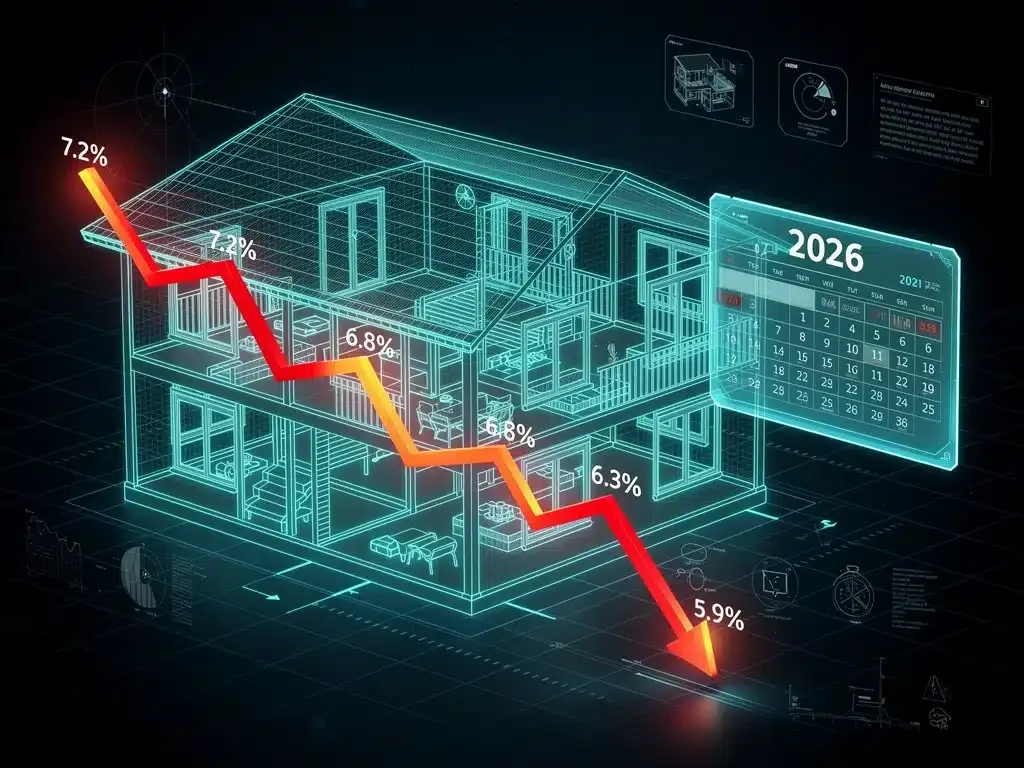
As fluctuating inflation numbers and economic shifts keep borrowing costs in flux, finding affordable home financing requires strategic timing.
Mortgage Rates in 2026 examines current rate projections, key Federal Reserve indicators, and actionable strategies borrowers can use to secure competitive interest rates.
Understanding the Economic Landscape for Mortgage Rates in 2026
The economic landscape poised to influence Mortgage Rates in 2026 remains a complex interplay of inflation, Federal Reserve policy, and global economic stability.
Analysts are closely watching these indicators to project where rates might settle, particularly for those hoping to secure deals below 6%.
Current projections suggest a gradual stabilization, but significant variables could shift the trajectory. Understanding these underlying economic forces is paramount for anyone planning to enter the housing market or refinance existing loans.
The Federal Reserve’s stance on interest rates, primarily the federal funds rate, directly impacts mortgage rates. Any adjustments made in 2024 and 2025 will have ripple effects into 2026, making their communications and actions critical to monitor.
Federal Reserve’s Influence on Future Mortgage Rates
The Federal Reserve plays a pivotal role in shaping the financial environment that dictates Mortgage Rates in 2026. Their primary tool, the federal funds rate, influences borrowing costs across the economy, including those for home loans.
Market expectations regarding future Fed actions are already priced into current mortgage rates. Therefore, any unexpected shifts in monetary policy could lead to significant fluctuations in the housing market.
Economists anticipate the Fed will continue to balance inflation control with economic growth, a strategy that will directly impact the trajectory of mortgage rates.
This delicate balance will be crucial for determining if rates can consistently fall below the 6% threshold.
Inflation Trends and Their Impact on Borrowing Costs
- Persistent inflation can compel the Federal Reserve to maintain higher interest rates, which directly translates to elevated mortgage costs.
- Conversely, a sustained decrease in inflation could provide the Fed with room to lower rates, creating a more favorable environment for homebuyers.
- Monitoring the Consumer Price Index (CPI) and other inflation metrics will offer key insights into potential rate movements.
Inflation remains a primary concern for central bankers, directly influencing their decisions on interest rates.
High inflation erodes purchasing power and typically leads to higher borrowing costs as lenders seek to maintain real returns on their investments.
Therefore, a consistent moderation in inflation is a prerequisite for any significant downward movement in Mortgage Rates in 2026. Without it, the likelihood of consistently finding deals below 6% diminishes.
Forecasting Mortgage Rate Trends for 2026
Forecasting Mortgage Rates in 2026 involves analyzing a multitude of economic indicators and expert predictions.
While no crystal ball exists, consensus among financial institutions points towards a potential stabilization, with a chance for rates to dip below 6% under specific conditions.
Several major financial institutions, including Fannie Mae and the Mortgage Bankers Association, regularly release their projections.
These forecasts provide valuable insights into the expected range of rates, helping consumers plan their home purchases or refinances.
The general sentiment suggests that while rates may not return to the historically low levels seen during the pandemic, a more moderate and potentially more affordable environment could emerge.
This scenario largely depends on global economic stability and domestic policy decisions.

Factors Driving Rate Fluctuations
- Global economic events, such as geopolitical tensions or supply chain disruptions, can introduce volatility into financial markets, impacting bond yields and, consequently, mortgage rates.
- Domestic economic performance, including employment figures and GDP growth, provides the Federal Reserve with data points to inform their monetary policy decisions.
- Investor demand for mortgage-backed securities (MBS) also plays a role; higher demand typically puts downward pressure on rates.
The interplay of these factors creates a dynamic environment where rate forecasts are subject to change. Homebuyers and homeowners should remain agile and informed, ready to act when favorable conditions arise.
Monitoring these drivers will be key to understanding the real-time movement of Mortgage Rates in 2026. A proactive approach will be essential for securing the best available terms.
Strategies for Finding Mortgage Deals Below 6%
Securing Mortgage Rates in 2026 below 6% will likely require a strategic approach, as such deals may not be universally available. Consumers will need to optimize their financial profiles and actively shop for the best terms.
Improving one’s credit score is often the first step, as lenders offer the most competitive rates to borrowers with excellent credit. A higher credit score signals lower risk, translating into better interest rates.
Additionally, exploring various loan products and lenders will be crucial. Different lenders have different risk appetites and may offer unique programs or incentives that could lead to rates below the prevailing market average.
Optimizing Your Financial Profile
- Maintain a strong credit score (760 or higher is ideal) by paying bills on time and keeping credit utilization low.
- Reduce your debt-to-income (DTI) ratio, as a lower DTI indicates greater capacity to manage mortgage payments.
- Save for a larger down payment, as a substantial down payment can reduce the loan-to-value (LTV) ratio, often leading to better interest rates.
These financial preparations are not just about securing a lower rate; they also demonstrate financial responsibility, which lenders value. A well-prepared borrower is a strong candidate for favorable mortgage terms.
Starting these preparations well in advance of 2026 will provide ample time to make significant improvements to your financial standing, increasing your chances of finding attractive Mortgage Rates in 2026.
The Role of Refinancing in 2026 for Existing Homeowners
For existing homeowners, 2026 could present a significant opportunity for refinancing, particularly if Mortgage Rates in 2026 dip below current levels.
Refinancing allows homeowners to secure a lower interest rate, reduce monthly payments, or even tap into home equity.
Monitoring rate trends will be essential for identifying the optimal time to refinance. A difference of even a quarter of a percentage point can lead to substantial savings over the life of a loan.
Homeowners should assess their current mortgage terms against projected rates in 2026. If a significant interest rate reduction is possible, the cost of refinancing, including closing costs, might be easily offset by long-term savings.
When to Consider Refinancing
- If current mortgage rates are at least 0.75% to 1% higher than the prevailing rates in 2026, refinancing becomes a strong consideration.
- When your credit score has significantly improved since you first obtained your mortgage, you may qualify for better terms.
- If you plan to stay in your home long enough to recoup the closing costs associated with refinancing.
Refinancing decisions should always be made after careful calculation of potential savings versus costs. Online refinance calculators can provide a good starting point for these evaluations.
Keeping an eye on market shifts and being prepared with necessary documentation will enable homeowners to act swiftly when favorable refinancing conditions for Mortgage Rates in 2026 emerge.
Impact of Housing Market Dynamics on Mortgage Rates
The dynamics of the housing market itself will also play a role in shaping Mortgage Rates in 2026. Factors such as housing supply, demand, and home price appreciation can indirectly influence lender behavior and investor confidence.
A balanced housing market, where supply meets demand, tends to foster more stable mortgage rates.
Conversely, an overheated market with rapid price increases might lead to concerns about affordability and potential market corrections, which can create rate volatility.
Government policies aimed at stimulating or cooling the housing market can also have an impact. These policies often aim to ensure accessibility and stability, which in turn can affect the broader mortgage rate environment.

Regional Variations in Mortgage Rate Impact
It’s important to recognize that while national trends for Mortgage Rates in 2026 provide a general outlook, regional variations can occur.
Local economic conditions, housing inventory, and even specific lender competition can lead to different rate offerings across states or metropolitan areas.
Prospective homebuyers should research local market conditions thoroughly. What might be a competitive rate in one area could be less so in another, making local expertise valuable.
Understanding these regional nuances is crucial for both buyers and real estate professionals. It ensures that expectations are realistic and strategies are tailored to specific market realities.
Expert Opinions and Consensus on 2026 Mortgage Rates
Expert opinions on Mortgage Rates in 2026 generally converge on a path of gradual moderation, though with inherent uncertainties.
Leading economists from major financial institutions provide insights that help paint a clearer picture for consumers.
While specific figures vary, many anticipate that if inflation continues its downward trend and the Federal Reserve achieves its target range, there will be room for mortgage rates to ease.
This consensus offers a degree of optimism for those hoping to secure rates below 6%.
However, experts also caution that geopolitical events, unexpected economic shocks, or a resurgence of inflation could quickly alter these forecasts. Flexibility and continuous monitoring remain key recommendations.
Key Takeaways from Expert Forecasts
- Most experts project a slight decrease or stabilization in mortgage rates compared to recent highs, with potential for dips below 6% in favorable economic conditions.
- The Federal Reserve’s actions will remain the single most influential factor, making their quarterly economic projections and statements critical.
- Homebuyers are advised to prepare their finances meticulously and remain patient, ready to act when market conditions align with their goals.
These expert insights underscore the importance of being well-informed and financially prepared. The housing market in 2026 will likely reward those who approach it with diligence and strategic planning.
Staying updated on these expert analyses will be invaluable for anyone navigating the mortgage landscape in the coming years, particularly for those targeting competitive Mortgage Rates in 2026.
| Key Point | Brief Description |
|---|---|
| Fed Policy Impact | Federal Reserve decisions on interest rates are the primary driver of mortgage rate movements. |
| Inflation Influence | Sustained decrease in inflation is crucial for rates to consistently fall below 6%. |
| Optimizing Profile | Strong credit scores and lower DTI ratios are key to securing the best deals. |
| Refinance Opportunity | 2026 could be a prime time for homeowners to refinance if rates drop significantly. |
Frequently Asked Questions About Mortgage Rates in 2026
What are the main factors influencing Mortgage Rates in 2026?▼The primary factors influencing Mortgage Rates in 2026 include the Federal Reserve’s monetary policy, inflation trends, overall economic growth, and global financial stability. These elements collectively shape the cost of borrowing for home loans in the United States.
Is it realistic to expect mortgage rates below 6% in 2026?▼Yes, it is realistic to expect periods of mortgage rates below 6% in 2026, provided inflation continues to moderate and the Federal Reserve adopts a more accommodative stance. However, sustained rates below this threshold will depend on consistent positive economic indicators.
How can I prepare to secure the best mortgage rate in 2026?▼To secure the best Mortgage Rates in 2026, focus on improving your credit score, reducing your debt-to-income ratio, and saving for a larger down payment. These steps demonstrate financial strength to lenders, qualifying you for more competitive offers.
Will refinancing be a good option for homeowners in 2026?▼Refinancing could be a very good option for homeowners in 2026, especially if current rates are significantly higher than those projected. It offers an opportunity to lower monthly payments or adjust loan terms, but always consider closing costs versus long-term savings.
What role does the housing market play in 2026 mortgage rates?▼The housing market’s dynamics, including supply, demand, and home price trends, indirectly influence Mortgage Rates in 2026. A stable, balanced market generally supports more predictable rates, while volatility in housing can lead to rate fluctuations and lender caution.
Looking Ahead: Navigating Mortgage Rates in 2026
The trajectory of Mortgage Rates in 2026 remains a critical point of interest for both prospective homebuyers and current homeowners.
While forecasts offer a cautiously optimistic outlook for rates to potentially dip below 6%, the economic landscape is subject to rapid shifts.
To stay informed on day-to-day rate fluctuations and market trends, track current daily mortgage rates.
Vigilance in monitoring Federal Reserve announcements, inflation reports, and broader economic indicators will be paramount.
Preparing your financial profile now will position you advantageously to seize favorable opportunities when they arise, ensuring you make informed decisions in a dynamic market.