Optimize Your Life Insurance 2026: Savings & Coverage Review
Advertisements

As the financial landscape evolves heading into 2026, proactively reviewing your life insurance policy is essential to avoiding overpayment and coverage gaps.
Industry updates reveal that optimizing your benefit now can yield potential savings of up to 20% while strengthening your financial security.
This quick breakdown covers what changed, why it matters, and what steps US policyholders should take next.
The Urgency of Reviewing Your Life Insurance for 2026
The financial world is constantly shifting, and what was optimal just a few years ago might not meet your needs for 2026.
Economic forecasts, interest rate changes, and legislative updates all play a role in how effective your current policy remains. Ignoring these shifts could mean missing out on better options or having inadequate coverage.
Many policyholders simply set and forget their life insurance, assuming it will always serve its original purpose.
However, life events like marriage, children, new homes, or career changes drastically alter protection needs. A policy review ensures that your coverage still aligns with your current life stage and future aspirations.
Furthermore, the market for life insurance products is continually innovating, offering new features and competitive pricing.
Remaining unaware of these advancements can prevent you from securing more favorable terms or potentially saving up to 20% on premiums. This makes a timely review, especially for 2026, an essential financial practice.
Why Annual Reviews are No Longer Enough
While annual financial check-ups are beneficial, the pace of change demands a more focused approach when it comes to life insurance.
The period leading up to 2026 presents specific economic indicators and regulatory shifts that warrant a deeper dive. These include potential changes in mortality tables and investment returns that impact policy pricing.
The emphasis on life insurance optimization 2026 isn’t just about saving money; it’s about ensuring peace of mind.
An unoptimized policy might leave your beneficiaries underprotected or cost you more than necessary for the coverage you receive. A thorough review helps bridge any gaps between your current policy and your future financial security goals.
For instance, technological advancements are making policy management and comparisons easier than ever, yet many individuals are not leveraging these tools.
Understanding how to utilize online resources and engage with financial advisors can significantly streamline the optimization process, making it less daunting and more effective.
Key Factors Driving Life Insurance Changes Towards 2026
Several macroeconomic and industry-specific factors are converging to make 2026 a pivotal year for life insurance.
Interest rate fluctuations directly impact the cost of whole life and universal life policies, influencing cash value growth and premium rates. Being aware of these trends is the first step toward effective life insurance optimization 2026.
Regulatory changes, particularly those related to insurance solvency and consumer protection, could also introduce new requirements or benefits.
These legislative shifts often create windows of opportunity for policyholders to adjust their coverage to meet new standards while potentially unlocking better value. Staying informed about these developments is paramount.
Moreover, advancements in medical science and public health trends are continuously refining mortality projections, which insurers use to calculate premiums.
As life expectancies evolve, so too do the underlying assumptions of insurance products. A policy review in light of these changes can reveal whether your current rates are still competitive.
Economic Outlook and Its Impact on Your Policy
The overall economic outlook for 2026 will undoubtedly influence investment returns, which are crucial for cash-value life insurance policies.
A robust economy might lead to higher returns, making certain policies more attractive. Conversely, a downturn could impact policy performance, necessitating adjustments to maintain desired benefits.
Inflation rates also play a significant role. If inflation outpaces your policy’s growth or the benefit amount, its real value to your beneficiaries diminishes over time.
This erosion of purchasing power highlights the need for regular reviews and potential adjustments to policy values to ensure adequate protection in the future.
Understanding these economic forces allows you to have a more informed discussion with your financial advisor.
It empowers you to ask the right questions about policy performance, potential adjustments, and how to best position your life insurance for long-term financial security. This proactive stance is key to successful life insurance optimization 2026.
Identifying Opportunities for Up to 20% Savings
One of the most compelling reasons to review your life insurance for 2026 is the potential for significant cost savings.
Many policyholders are paying more than necessary due to outdated policies, changes in health, or simply a lack of awareness about more competitive products available in the market.
Identifying these opportunities can lead to substantial financial relief.
Re-evaluating your health status is a prime example. If your health has improved since you first purchased your policy, you might qualify for better underwriting classes and lower premiums.
Even small improvements in lifestyle, such as quitting smoking or managing chronic conditions, can translate into considerable savings on your life insurance.
Furthermore, comparing your existing policy with newer products on the market can reveal policies with similar or better coverage at a lower cost.
The competitive nature of the insurance industry means that insurers are constantly offering incentives and more efficient products. A diligent comparison can easily yield the desired 20% savings when seeking life insurance optimization 2026.
Strategies for Reducing Your Premiums
One effective strategy is to consider converting a whole life policy to a term policy if your financial obligations have decreased.
While whole life offers lifelong coverage, a term policy might be more cost-effective if your primary need for coverage is for a specific period, such as until your mortgage is paid off or children are financially independent.
Another approach involves adjusting your coverage amount. If you are over-insured, reducing your death benefit can lower your premiums without compromising essential protection.
Conversely, if you are under-insured, increasing your coverage might be necessary, but exploring different policy types could still lead to overall savings or better value for money.
Lastly, bundling your life insurance with other insurance products, such as home or auto insurance, from the same provider can often result in multi-policy discounts.
Many insurers offer these incentives to retain customers, providing an easy avenue to reduce your total insurance expenditure and achieve effective life insurance optimization 2026.
The Role of Technology in Life Insurance Optimization
The digital revolution has profoundly impacted the insurance industry, offering unprecedented tools for policy comparison, management, and even personalized advice.
Leveraging these technological advancements is crucial for anyone looking to achieve comprehensive life insurance optimization 2026. Online platforms and AI-driven tools streamline the review process significantly.
Comparison websites and aggregators allow you to quickly evaluate multiple policies from various providers, presenting a clear overview of features, benefits, and costs.
This transparency empowers consumers to make more informed decisions, bypassing the traditional, often time-consuming, process of consulting individual agents.
Furthermore, many insurance companies now offer sophisticated online portals where policyholders can access their policy details, make payments, and even initiate changes.
These self-service options enhance convenience and provide greater control over your insurance portfolio, facilitating ongoing optimization efforts without constant reliance on an agent.
AI and Data Analytics for Personalized Coverage
Artificial intelligence and advanced data analytics are transforming how insurers assess risk and tailor policies.
This means more personalized coverage options that better fit individual needs and lifestyles, potentially leading to more accurate pricing and greater value for policyholders. These technologies are making life insurance more dynamic and responsive.
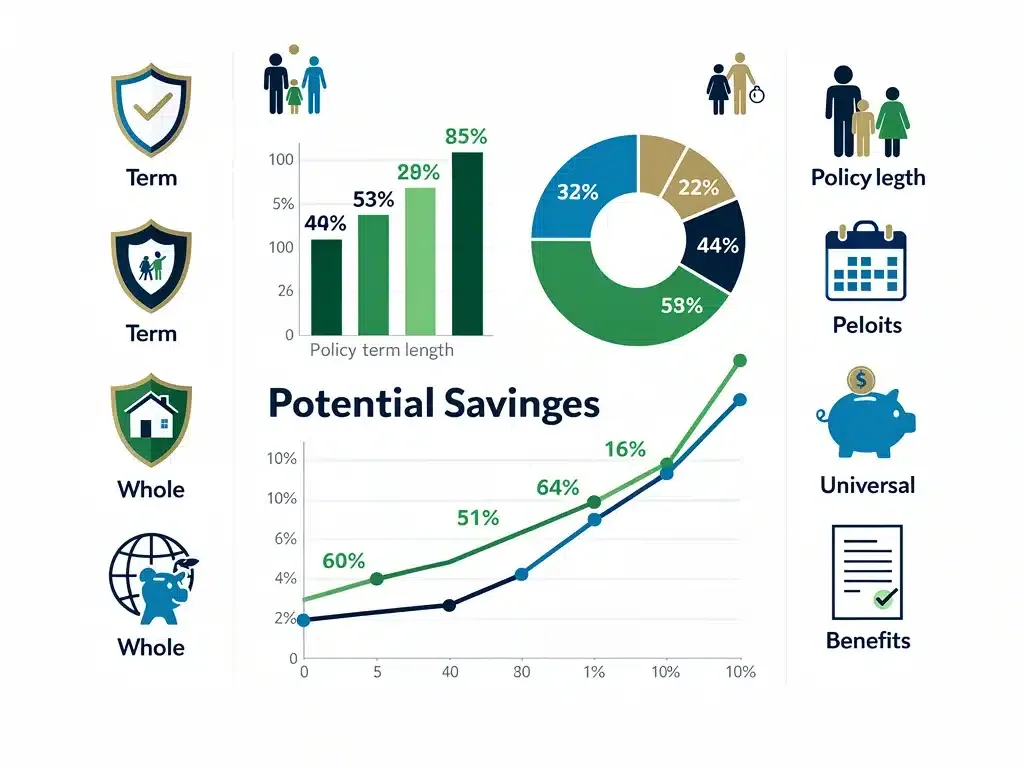
Utilizing these tools, insurers can offer dynamic policies that adjust based on real-time health data, lifestyle changes, or financial milestones.
While still evolving, this trend suggests that future life insurance products will be far more flexible and adaptive, making regular reviews and optimization even more critical.
Policyholders should explore platforms that offer personalized recommendations based on their financial goals, health profile, and risk tolerance.
This data-driven approach ensures that your life insurance is not just a static product but a dynamic component of your overall financial strategy, continuously optimized for your evolving needs.
Understanding Different Policy Types for 2026
Navigating the various types of life insurance policies is fundamental to achieving effective life insurance optimization 2026.
Each policy type, whether term, whole, universal, or variable universal life, offers distinct features, benefits, and drawbacks. Understanding these differences empowers you to select the best fit for your specific financial situation and long-term goals.
Term life insurance provides coverage for a specific period, offering a death benefit if the insured passes away within that term.
It is generally more affordable than permanent options and can be ideal for covering temporary financial obligations, such as a mortgage or children’s education. Its simplicity makes it a popular choice for many families.
Permanent life insurance, including whole life and universal life, offers lifelong coverage and typically includes a cash value component that grows over time.
This cash value can be accessed through loans or withdrawals, providing a living benefit. While more expensive, these policies offer long-term financial security and potential investment growth.
Tailoring Coverage to Your Life Stage and Goals
For young families, term life insurance might be the most appropriate choice, providing substantial coverage at an affordable price during critical years.
As financial obligations shift and wealth accumulates, converting a term policy to a permanent one or exploring universal life options could be more advantageous for long-term planning.
Individuals nearing retirement might consider policies with living benefits, such as accelerated death benefits for chronic or critical illness, which can provide financial support during health crises.
These features add another layer of protection, ensuring that your life insurance serves multiple purposes beyond just a death benefit.
Regularly assessing your life stage, financial goals, and family needs against the features of different policy types is crucial.
This ongoing evaluation ensures that your life insurance remains a relevant and effective tool in your financial arsenal. Expert advice can help clarify which policy type is best for your unique circumstances and for life insurance optimization 2026.
The Importance of Professional Guidance and Benchmarking
While self-service tools and online resources are valuable, the complexity of life insurance often warrants professional guidance.
A qualified financial advisor can provide tailored advice, help you understand the nuances of different policies, and ensure your choices align with your broader financial plan.
Their expertise is invaluable for effective life insurance optimization 2026.
Advisors can also assist in benchmarking your current policy against industry standards and newer offerings.
This involves comparing premium rates, cash value growth, policy riders, and overall value proposition.
Such a detailed comparison can uncover areas where your current policy might be underperforming or where better alternatives exist.
Furthermore, an advisor can help you navigate the underwriting process if you decide to switch policies or make significant changes.
They can advocate on your behalf, ensuring you receive the most favorable terms possible based on your health and financial profile. This professional support can be the difference between minor adjustments and significant long-term benefits.
Finding the Right Advisor for Your Needs
When selecting a financial advisor, look for someone with specific expertise in life insurance and a strong understanding of the 2026 financial landscape.
Certifications such as Certified Financial Planner (CFP) or Chartered Life Underwriter (CLU) indicate a high level of expertise and ethical standards.
It’s also important to choose an advisor who operates as a fiduciary, meaning they are legally obligated to act in your best interest.
This ensures that their recommendations are genuinely aimed at optimizing your financial well-being, rather than being driven by commissions or product sales targets. Transparency in their fee structure is also a key indicator of trustworthiness.

Engaging with an advisor who provides clear explanations and encourages open dialogue will empower you to make confident decisions about your life insurance.
This collaborative approach is essential for achieving comprehensive and sustainable life insurance optimization 2026, ensuring your policy supports your financial journey effectively.
Avoiding Common Pitfalls in Life Insurance Review
When undertaking a life insurance review for 2026, it is easy to fall into common traps that can undermine your efforts to optimize coverage and savings.
One significant pitfall is focusing solely on the premium cost without considering the overall value and suitability of the policy. The cheapest option is not always the best fit for your long-term needs.
Another frequent mistake is failing to disclose all relevant health and lifestyle changes to your insurer or agent.
While it might seem advantageous to omit minor details, this can lead to issues during claims processing or even policy cancellation. Transparency ensures that your coverage remains valid and effective when it’s most needed.
Underestimating the impact of inflation on your death benefit is another critical oversight.
What seems like adequate coverage today might not be sufficient to support your beneficiaries’ needs in 2026 or beyond due to rising costs of living.
Regularly adjusting your coverage to account for inflation is vital for true life insurance optimization 2026.
Ensuring Policy Alignment with Estate Planning
Many policyholders overlook the crucial connection between their life insurance and their broader estate plan.
Your life insurance policy should seamlessly integrate with your will, trusts, and other estate documents to ensure your assets are distributed according to your wishes and to minimize potential tax implications for your beneficiaries.
Failing to update beneficiary designations after major life events, such as divorce or the birth of a child, is a common error.
Outdated beneficiaries can lead to significant complications and delays in payouts, potentially causing financial hardship for your intended recipients. A thorough review includes verifying and updating all beneficiary information.
Consulting with an estate planning attorney in conjunction with your financial advisor can ensure that your life insurance serves its intended purpose within your overall estate strategy.
This integrated approach is essential for comprehensive financial security and for achieving robust life insurance optimization 2026.
| Key Aspect | Action for 2026 |
|---|---|
| Policy Review | Assess current coverage against evolving needs and market conditions. |
| Savings Potential | Explore opportunities for up to 20% premium reduction through re-underwriting or new policies. |
| Coverage Alignment | Ensure policy benefits align with current life stage, financial goals, and estate plans. |
| Expert Consultation | Seek professional advice to navigate complex options and secure optimal terms. |
Frequently Asked Questions About Life Insurance Optimization for 2026
Why is 2026 a significant year for life insurance review?▼2026 is significant due to anticipated economic shifts, potential legislative changes, and evolving mortality tables, all of which can impact policy pricing and benefits. A timely review ensures your coverage remains competitive and suited to future financial realities, allowing for proactive adjustments.
How can I potentially save 20% on my life insurance premiums?▼Savings can be achieved by re-evaluating your health status, comparing existing policies with newer market offerings, adjusting coverage amounts, or bundling policies. Improved health might qualify you for better rates, while market comparison can reveal more cost-effective options from various providers.
What role does technology play in optimizing my life insurance?▼Technology offers online comparison tools and AI-driven analytics for personalized coverage recommendations. These platforms streamline the review process, allowing you to quickly compare policies, manage your account, and assess how different options align with your financial goals, making optimization more efficient.
Should I consult a financial advisor for my life insurance review?▼Yes, professional guidance is highly recommended. A qualified financial advisor can provide tailored advice, help benchmark your policy, and navigate complex options. They ensure your life insurance aligns with your broader financial and estate planning, maximizing benefits and minimizing pitfalls.
What common pitfalls should I avoid during the optimization process?▼Avoid focusing solely on premium cost over value, failing to disclose health changes, and underestimating inflation’s impact on your death benefit. Also, ensure your policy integrates seamlessly with your estate plan and that beneficiary designations are current to prevent future complications.
Looking Ahead: Ensuring Your Financial Security
The imperative to ensure your life insurance optimization 2026 is not merely a task but a strategic financial move.
As the landscape continues to evolve, staying proactive in reviewing and adjusting your policy will safeguard your family’s future and maximize your investment.
It is crucial to monitor economic indicators, legislative updates, and market innovations that could impact your coverage.
For practical strategies on reducing premium costs without sacrificing essential coverage, check out Insurance Information Institute’s Guide on How to Save Money on Life Insurance.
By taking these steps now, you can confidently navigate the financial complexities of 2026 and beyond, securing both peace of mind and potential savings.