Roth vs. Traditional 401(k) 2026: Tax Savings Compared
Advertisements
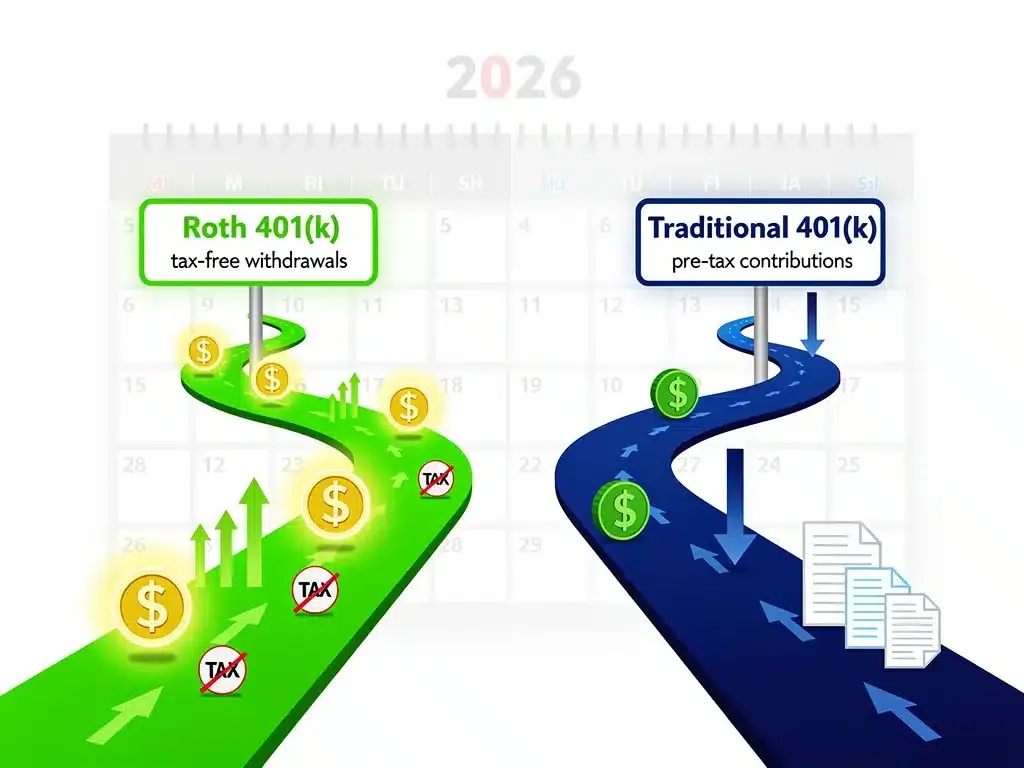
Deciding between a Roth vs. Traditional 401(k) for 2026 involves critical tax considerations that can significantly impact your retirement savings. This guide offers a factual and up-to-date analysis, providing context on contribution rules and withdrawal implications to help individuals in the U.S. optimize their financial planning.
Understanding the nuances of each plan is essential for maximizing your retirement nest egg. We delve into how current tax laws and projected future changes influence the choice between pre-tax and after-tax contributions, ensuring you have the necessary information for a well-informed decision.
This article aims to clarify the benefits and drawbacks of both Roth and Traditional 401(k) options for the upcoming year. It focuses on practical advice, drawing from expert analysis to present a clear picture of which retirement plan might save you more tax dollars in the long run.
Comparing Roth vs. Traditional 401(k) for 2026: Which Retirement Plan Saves You More Tax Dollars? is a crucial decision for anyone planning their financial future. As we approach 2026, understanding the latest regulations, contribution limits, and tax implications for both options becomes paramount. This comprehensive guide will break down the key differences, helping you determine which strategy aligns best with your financial goals and current tax situation.
The choice between a Roth and a Traditional 401(k) hinges on when you prefer to pay taxes: now or in retirement. This fundamental distinction has long-term consequences for your wealth accumulation and withdrawal strategies. We will explore the mechanics of each plan, offering insights into how current and future tax environments might influence your decision.
Financial experts consistently emphasize the importance of proactive retirement planning. By understanding the intricacies of Roth vs Traditional 401(k) for 2026, you can make an informed choice that could save you significant tax dollars over your lifetime. This article provides the necessary context and detailed analysis to guide your decision-making process.
Understanding the Basics: Roth vs Traditional 401(k)
The fundamental difference between a Roth and a Traditional 401(k) lies in their tax treatment. This distinction is critical for anyone trying to decide between the two, especially when considering long-term financial implications for 2026 and beyond.
Traditional 401(k) contributions are made with pre-tax dollars, meaning they reduce your taxable income in the year you contribute. Roth 401(k) contributions are made with after-tax dollars, offering tax-free withdrawals in retirement, provided certain conditions are met.
Understanding these core differences is the first step in determining which plan is more advantageous for your personal financial situation. The decision often boils down to your current income, anticipated future income, and tax bracket.
Traditional 401(k): Pre-Tax Advantages
A Traditional 401(k) allows you to contribute money before taxes are deducted from your paycheck. This reduces your current taxable income, potentially lowering your tax bill in the present year, which can be a significant benefit for high-income earners.
The growth within a Traditional 401(k) is tax-deferred, meaning you won’t pay taxes on investment gains until you withdraw the money in retirement. This compounding growth without annual tax drag can lead to substantial accumulation over decades of saving.
- Contributions are tax-deductible in the year they are made.
- Investment growth is tax-deferred until withdrawal.
- Withdrawals in retirement are taxed as ordinary income.
- Mandatory Required Minimum Distributions (RMDs) begin at age 73.
Roth 401(k): Tax-Free Retirement Income
Conversely, a Roth 401(k) involves contributions made with after-tax dollars, meaning you pay taxes on the money now. While this doesn’t reduce your current taxable income, it offers a powerful advantage: qualified withdrawals in retirement are entirely tax-free.
This tax-free growth and withdrawal feature is particularly appealing if you anticipate being in a higher tax bracket during retirement than you are today. The certainty of tax-free income can provide significant peace of mind in your later years.
- Contributions are made with after-tax dollars.
- Qualified withdrawals in retirement are tax-free.
- Investment growth is also tax-free if withdrawals are qualified.
- No Required Minimum Distributions (RMDs) for the original owner until death, allowing assets to grow longer.
Contribution Limits and Income Thresholds for 2026
Understanding the contribution limits for both Roth and Traditional 401(k) plans is vital for maximizing your retirement savings. These limits are subject to annual adjustments by the IRS, and staying informed for 2026 is key to optimal planning.
Both types of 401(k) plans generally share the same contribution limits, which are reviewed annually for inflation. However, certain income thresholds can affect eligibility for Roth IRA contributions, although Roth 401(k)s typically do not have these same income restrictions.
It is important to note that employer contributions, such as matching contributions, are always made on a pre-tax basis into a Traditional 401(k) bucket, even if your personal contributions are directed to a Roth 401(k). These employer contributions and their earnings will be taxable upon withdrawal.
Projected 2026 Contribution Maximums
While the official 2026 contribution limits for 401(k) plans have not yet been released, they are typically announced in late fall of the preceding year. Based on historical trends and inflation, experts anticipate a slight increase from the 2025 limits.
For 2025, the elective deferral limit for employees contributing to 401(k) plans (both Traditional and Roth) was $23,000. Individuals aged 50 and over could contribute an additional catch-up contribution of $7,500, bringing their total to $30,500.
These figures serve as a strong indicator for what to expect in 2026, though taxpayers should always confirm the official IRS announcements. Planning your contributions around these maximums is crucial for effective retirement savings and determining your ideal Roth vs Traditional 401(k) strategy.
Income Limitations and Backdoor Strategies
Unlike Roth IRAs, Roth 401(k)s typically do not have income limitations that prevent high-income earners from contributing directly. This makes the Roth 401(k) an attractive option for individuals whose income exceeds the thresholds for direct Roth IRA contributions.
For those who earn too much to contribute to a Roth IRA directly, the Roth 401(k) provides a valuable alternative to save after-tax dollars for retirement. This flexibility is a significant advantage when Comparing Roth vs Traditional 401(k) for 2026, particularly for high earners.
While backdoor Roth IRA strategies exist for those exceeding income limits for Roth IRAs, they are not directly applicable to Roth 401(k)s due to their different eligibility rules. This is another key differentiator to consider when evaluating your options.
Tax Implications: Present vs. Future Tax Brackets
The core of the Roth vs Traditional 401(k) decision lies in predicting your future tax situation. This involves a careful analysis of your current income and anticipated tax bracket during your retirement years, which can be challenging but highly rewarding.
If you expect to be in a higher tax bracket in retirement than you are now, a Roth 401(k) is generally more advantageous. Paying taxes on your contributions today at a lower rate means your tax-free withdrawals in the future will be more valuable.
Conversely, if you expect to be in a lower tax bracket in retirement, a Traditional 401(k) might be preferable. The upfront tax deduction reduces your current tax burden, and you’ll pay taxes on withdrawals when your income (and thus your tax rate) is lower.
Current Tax Savings with Traditional 401(k)
The immediate benefit of a Traditional 401(k) is the reduction in your current taxable income. For example, if you contribute $20,000 to a Traditional 401(k) and are in the 24% tax bracket, you effectively save $4,800 on your current tax bill.
This upfront tax break can be particularly appealing for individuals currently in their peak earning years, allowing them to defer a significant portion of their income from taxation. The funds saved on taxes can then be reinvested or used for other financial goals.
The power of tax deferral means that your money grows without being subject to annual income taxes on dividends or capital gains, further accelerating your savings. This aspect of the Traditional 401(k) is a major draw for many investors focused on current tax efficiency.
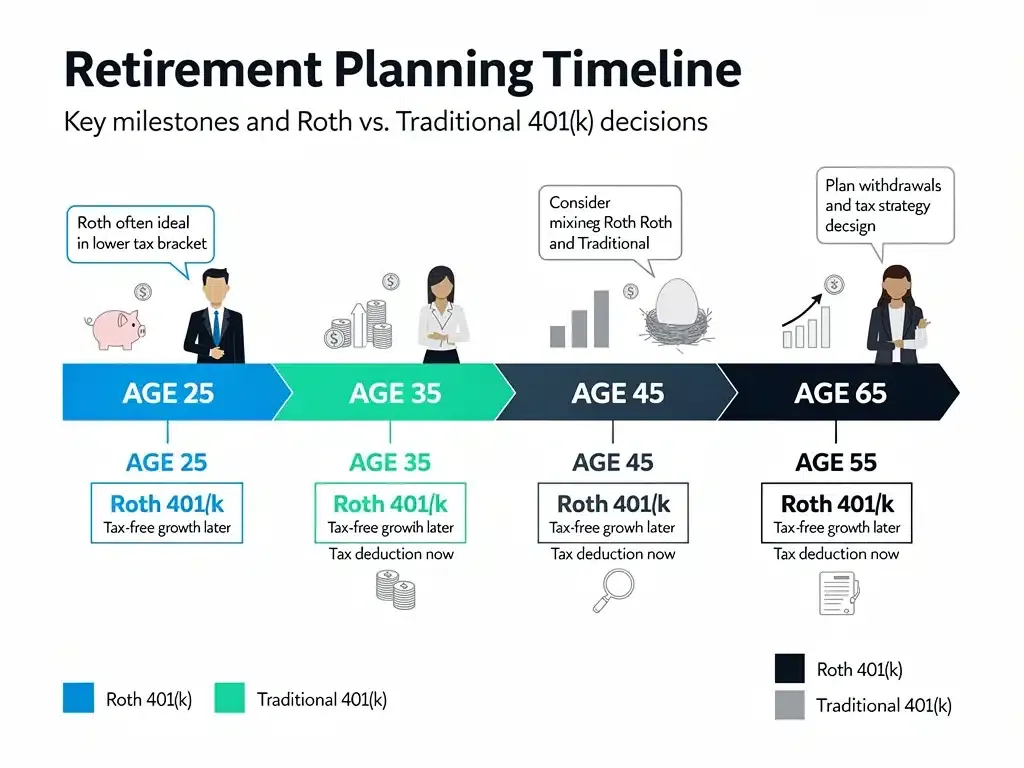
Future Tax-Free Growth with Roth 401(k)
The Roth 401(k) offers the significant advantage of tax-free withdrawals in retirement. This means that all the growth your investments experience over decades will not be subject to federal income tax, provided the withdrawals are qualified.
For a withdrawal to be qualified, your Roth 401(k) must have been open for at least five years, and you must be at least 59½ years old, permanently disabled, or using the funds for a first-time home purchase (with specific limits). Meeting these conditions unlocks the full tax-free benefit.
This feature is especially valuable in an environment where future tax rates are uncertain or expected to rise. The ability to withdraw funds without triggering a tax event provides a powerful hedge against future tax increases, making the Roth vs Traditional 401(k) decision highly strategic.
Withdrawal Rules and Flexibility in Retirement
Understanding the withdrawal rules for both Roth and Traditional 401(k)s is as important as understanding the contribution rules. These regulations dictate when and how you can access your retirement funds, and the tax implications of those withdrawals.
Traditional 401(k) withdrawals are generally taxed as ordinary income in retirement. Roth 401(k) withdrawals, on the other hand, are typically tax-free if they are qualified, offering greater flexibility and predictability in your retirement income planning.
Both plans have rules regarding early withdrawals and required minimum distributions (RMDs), which can impact your overall financial strategy in retirement. These rules are crucial when evaluating the long-term benefits of Roth vs Traditional 401(k).
Required Minimum Distributions (RMDs)
For Traditional 401(k) accounts, the IRS mandates that you begin taking Required Minimum Distributions (RMDs) once you reach age 73 (for those born in 1950 or later). These distributions are taxable as ordinary income and are designed to ensure that the government eventually collects taxes on your deferred savings.
The Secure Act 2.0, enacted in late 2022, raised the RMD age from 72 to 73, and it is slated to increase to 75 in 2033. This change provides a bit more time for tax-deferred growth, but RMDs remain a significant factor in Traditional 401(k) planning.
Roth 401(k)s, however, are generally exempt from RMDs for the original owner. This means your money can continue to grow tax-free for as long as you live, offering greater control and potentially larger inheritances for beneficiaries. This is a key advantage when considering Roth vs Traditional 401(k) for 2026.
Early Withdrawal Penalties and Exceptions
Both Traditional and Roth 401(k) plans impose penalties for early withdrawals, typically before age 59½. A 10% penalty usually applies, in addition to income taxes on Traditional 401(k) withdrawals.
For Roth 401(k)s, if you withdraw earnings before the age of 59½ and before the account has been open for five years, those earnings will be subject to both income tax and the 10% penalty. Your original contributions, however, can generally be withdrawn tax- and penalty-free at any time.
There are several exceptions to early withdrawal penalties, such as for disability, unreimbursed medical expenses, or substantial equal periodic payments. Understanding these exceptions can provide some flexibility, but generally, these accounts are designed for long-term retirement savings.
Employer Contributions and Matching for 2026
Employer contributions, particularly matching contributions, are a critical component of any 401(k) plan and can significantly boost your retirement savings. It’s important to understand how these contributions interact with both Roth and Traditional 401(k) options.
Regardless of whether you choose a Roth or Traditional 401(k) for your personal contributions, employer matching contributions are always made on a pre-tax basis into your Traditional 401(k) account. This means they will be subject to taxes upon withdrawal in retirement.
This dual structure means that even if you contribute exclusively to a Roth 401(k), you will likely have a Traditional 401(k) component from your employer’s contributions. This hybrid approach is common and influences your overall tax planning strategy.
Maximizing Employer Match
Always contribute at least enough to your 401(k) to receive the full employer match, if offered. This is essentially free money and is one of the most effective ways to accelerate your retirement savings, regardless of your choice between Roth vs Traditional 401(k).
Failing to contribute enough to get the full match means leaving valuable retirement funds on the table. The employer match grows tax-deferred in the Traditional portion of your 401(k), further emphasizing the importance of this benefit.
Even if your primary goal is tax-free income in retirement through a Roth 401(k), the guaranteed return of an employer match on the Traditional side is too significant to ignore. It effectively creates a diversified tax strategy within a single retirement vehicle.
Tax Treatment of Employer Contributions
As previously noted, all employer contributions and their associated earnings are funneled into the Traditional portion of your 401(k). This means that these funds will be taxed as ordinary income when you withdraw them in retirement.
This distinction is crucial for financial planning. Even if you are a staunch advocate for Roth contributions, you will still have a taxable component to your 401(k) from your employer’s generosity. This requires a balanced approach to tax planning in retirement.
When modeling your retirement income, remember to account for both the tax-free withdrawals from your Roth contributions and the taxable withdrawals from your employer’s contributions. This comprehensive view helps in accurately projecting your post-tax retirement income when considering Roth vs Traditional 401(k) for 2026.
Converting to a Roth 401(k): In-Plan Conversions
For those with existing Traditional 401(k) balances, an in-plan Roth conversion can be a powerful strategy to shift tax-deferred assets to a tax-free growth environment. This option allows you to convert all or a portion of your Traditional 401(k) balance into a Roth 401(k) within the same plan.
The primary catch with an in-plan Roth conversion is that you must pay income taxes on the converted amount in the year of conversion. This means you are essentially prepaying your taxes on those funds, allowing them to grow and be withdrawn tax-free in retirement.
The decision to perform an in-plan conversion is highly dependent on your current tax situation and your expectations for future tax rates. It’s a strategic move that can significantly alter your retirement tax landscape when evaluating Roth vs Traditional 401(k) options.
When to Consider an In-Plan Roth Conversion
An in-plan Roth conversion can be particularly advantageous during years when you anticipate being in a lower tax bracket. This might occur during a career break, a period of reduced income, or early retirement before other income sources kick in.
Another scenario where a conversion makes sense is if you expect tax rates to rise significantly in the future. By paying taxes now at a potentially lower rate, you protect your retirement savings from higher future tax burdens.
Consider your long-term financial goals and time horizon. The longer your money has to grow tax-free in the Roth 401(k) after conversion, the greater the potential benefit. This strategy requires careful consideration of the immediate tax cost versus the long-term tax savings when Comparing Roth vs Traditional 401(k) for 2026.
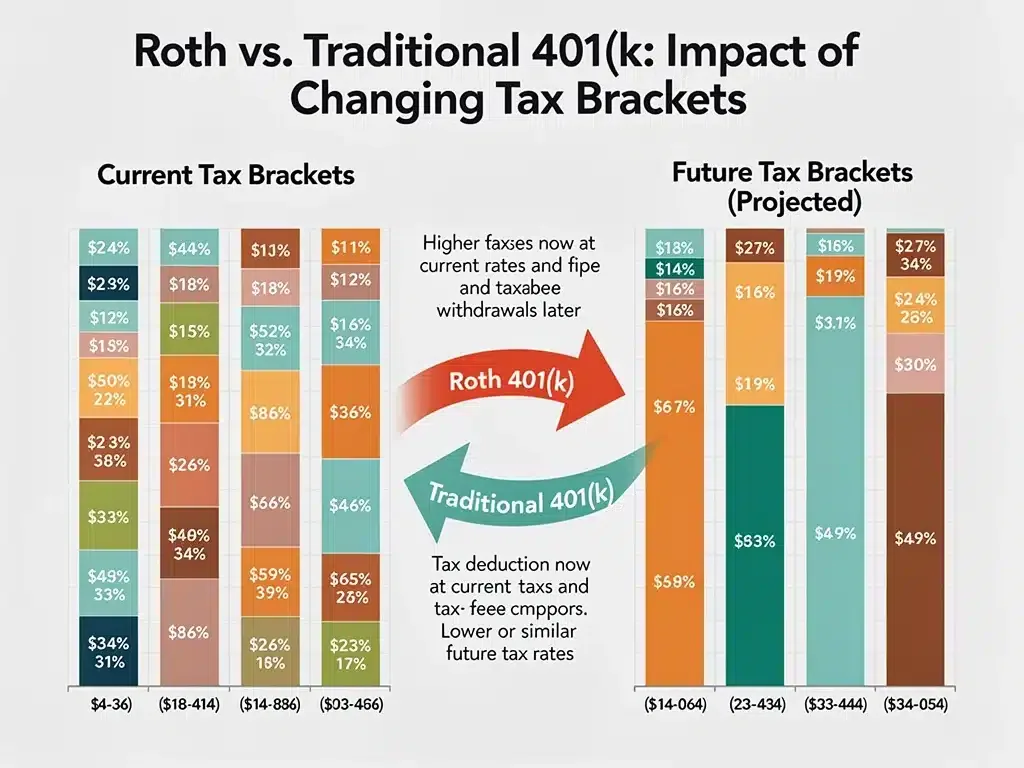
Tax Implications of Conversions
The amount you convert from a Traditional to a Roth 401(k) is added to your taxable income for the year of conversion. This can push you into a higher tax bracket, so it’s essential to plan carefully to avoid an unexpectedly large tax bill.
It is often advisable to consult with a financial advisor to determine the optimal amount to convert and to understand the full tax impact. They can help you model different scenarios and integrate the conversion into your broader financial plan.
While the immediate tax hit can be substantial, the long-term benefits of tax-free growth and withdrawals can outweigh the upfront cost, especially for younger individuals with a long retirement horizon. The strategic use of conversions can significantly enhance the value of your Roth vs Traditional 401(k) planning.
Factors Influencing Your 2026 Decision
Choosing between a Roth and Traditional 401(k) for 2026 is not a one-size-fits-all decision. Several personal and economic factors should influence your choice, requiring a thoughtful evaluation of your unique financial situation and future outlook.
Your current income level, anticipated income trajectory, and expectations about future tax rates are paramount. These elements directly impact whether an upfront tax deduction or future tax-free withdrawals provide the greater benefit.
Additionally, your age, time horizon until retirement, and overall financial goals play a significant role in determining the most suitable plan. A holistic view is essential when Comparing Roth vs Traditional 401(k) for 2026.
Current Income and Tax Bracket
If you are currently in a high tax bracket, the immediate tax deduction offered by a Traditional 401(k) can be very appealing. It reduces your current taxable income, potentially saving you a significant amount on your tax bill today.
Conversely, if you are in a lower tax bracket now (perhaps early in your career or during a period of reduced income), contributing to a Roth 401(k) can be highly advantageous. Paying taxes at a lower rate now sets you up for tax-free growth and withdrawals in retirement, when your income might be higher.
Regularly reviewing your income and tax bracket is crucial, as these can change throughout your career. This ongoing assessment helps you adapt your Roth vs Traditional 401(k) strategy as your financial circumstances evolve.
Anticipated Future Tax Rates
Predicting future tax rates is inherently challenging, but it’s a key consideration for the Roth vs Traditional 401(k) debate. If you believe tax rates will be higher in the future, a Roth 401(k) is generally the preferred choice.
The ability to lock in your tax rate today by paying taxes on contributions means you are insulated from potential future tax increases. This can be a powerful hedge against legislative changes that could impact your retirement income.
If you anticipate tax rates will be lower in retirement, a Traditional 401(k) might be more suitable. The deferred taxation allows you to pay taxes on your withdrawals when rates are more favorable, optimizing your overall tax burden.
Diversifying Your Retirement Savings
While choosing between a Roth and Traditional 401(k) is important, many financial advisors recommend a diversified approach to retirement savings. This often involves contributing to both pre-tax and after-tax accounts to provide flexibility and hedge against future tax uncertainties.
By having a mix of Traditional and Roth accounts, you create a “tax diversified” retirement portfolio. This strategy allows you to choose which accounts to draw from in retirement based on your income needs and the prevailing tax rates at that time.
This balanced approach helps mitigate the risk of being entirely exposed to one tax treatment, offering greater control over your retirement income and tax liabilities. It’s a pragmatic strategy when considering the long-term implications of Roth vs Traditional 401(k) for 2026 and beyond.
The Benefit of a Hybrid Approach
A hybrid approach means contributing to both a Traditional 401(k) and a Roth 401(k), if your plan allows. This strategy ensures you benefit from both current tax deductions and future tax-free withdrawals, providing a robust and adaptable retirement plan.
For instance, you might contribute enough to your Traditional 401(k) to get your employer match and then direct additional contributions to your Roth 401(k). This balances the immediate tax benefits with the long-term tax-free growth potential.
Such diversification offers flexibility in retirement. You can strategically withdraw from your Traditional 401(k) to fill lower tax brackets and then tap into your Roth 401(k) for tax-free income when needed, optimizing your overall tax efficiency. This is a sophisticated way to manage your Roth vs Traditional 401(k) decision.
Managing Taxable Income in Retirement
Having both Traditional and Roth funds in retirement provides significant control over your taxable income. This can be particularly useful for managing Medicare premiums, which are income-dependent, and avoiding higher tax brackets.
By strategically drawing from your Roth accounts, you can keep your adjusted gross income (AGI) lower, potentially reducing your Medicare Part B and Part D premiums. This is a subtle yet powerful benefit of Roth savings.
Furthermore, managing your taxable income in retirement can help preserve other tax credits or deductions you might be eligible for. The flexibility offered by a diversified portfolio can lead to substantial savings and greater financial security in your later years, making the Roth vs Traditional 401(k) choice a critical part of a broader strategy.
| Key Decision Point | Roth vs Traditional 401(k) for 2026 |
|---|---|
| Tax Treatment | Traditional: Pre-tax contributions, taxable withdrawals. Roth: After-tax contributions, tax-free withdrawals. |
| Current vs. Future Taxes | Traditional: Better if current tax rate > future. Roth: Better if current tax rate < future. |
| RMDs & Flexibility | Traditional: RMDs at 73, taxable. Roth: No RMDs for owner, tax-free withdrawals. |
| Employer Match | Always pre-tax into Traditional 401(k), taxable upon withdrawal. |
Frequently Asked Questions About 401(k) Choices
What is the main difference between Roth and Traditional 401(k) for 2026?▼The primary distinction lies in their tax treatment. Traditional 401(k) contributions are pre-tax, reducing current taxable income, but withdrawals are taxed in retirement. Roth 401(k) contributions are after-tax, providing tax-free withdrawals in retirement, making the choice dependent on current versus future tax expectations.
Who benefits more from a Traditional 401(k)?▼Individuals currently in a higher tax bracket than they expect to be in retirement often benefit more from a Traditional 401(k). The immediate tax deduction reduces their current tax burden, and they pay taxes on withdrawals when their income and tax rate are lower in retirement.
Are there income limits for Roth 401(k) contributions in 2026?▼Unlike Roth IRAs, Roth 401(k)s generally do not have income limitations for direct contributions. This makes them an attractive option for high-income earners who may be phased out of contributing to a Roth IRA, offering flexibility in after-tax retirement savings.
Can I convert my Traditional 401(k) to a Roth 401(k)?▼Yes, many plans allow for in-plan Roth conversions. This involves paying income taxes on the converted amount in the year of conversion. It’s a strategic move often considered during periods of lower income or when anticipating higher future tax rates to secure tax-free retirement withdrawals.
How do employer matching contributions work with Roth vs. Traditional 401(k)?▼Employer matching contributions are always made on a pre-tax basis into your Traditional 401(k), even if your personal contributions go to a Roth 401(k). These employer contributions and their earnings will be taxable upon withdrawal in retirement, creating a hybrid tax structure.
Looking Ahead: Strategic Retirement Planning
The decision between a Roth vs. Traditional 401(k) for 2026 is a dynamic one, requiring ongoing assessment of your financial situation and the evolving tax landscape. Future policy changes and economic conditions will continue to influence the optimal strategy for maximizing your retirement savings.
It is advisable to consult with a qualified financial advisor to tailor your 401(k) strategy to your specific circumstances. Their expertise can help you navigate the complexities of tax laws, contribution limits, and withdrawal rules, ensuring your plan remains aligned with your long-term goals.
By staying informed and proactive, you can make well-considered decisions that significantly impact your financial well-being in retirement. Regularly reviewing your choice of Roth vs Traditional 401(k) is a cornerstone of effective personal finance management.