Cryptocurrency Regulation 2026: 3 Compliance Steps for Investors
Advertisements
Navigating the evolving 2026 cryptocurrency regulatory landscape in the United States requires digital asset investors to take a proactive approach to compliance.
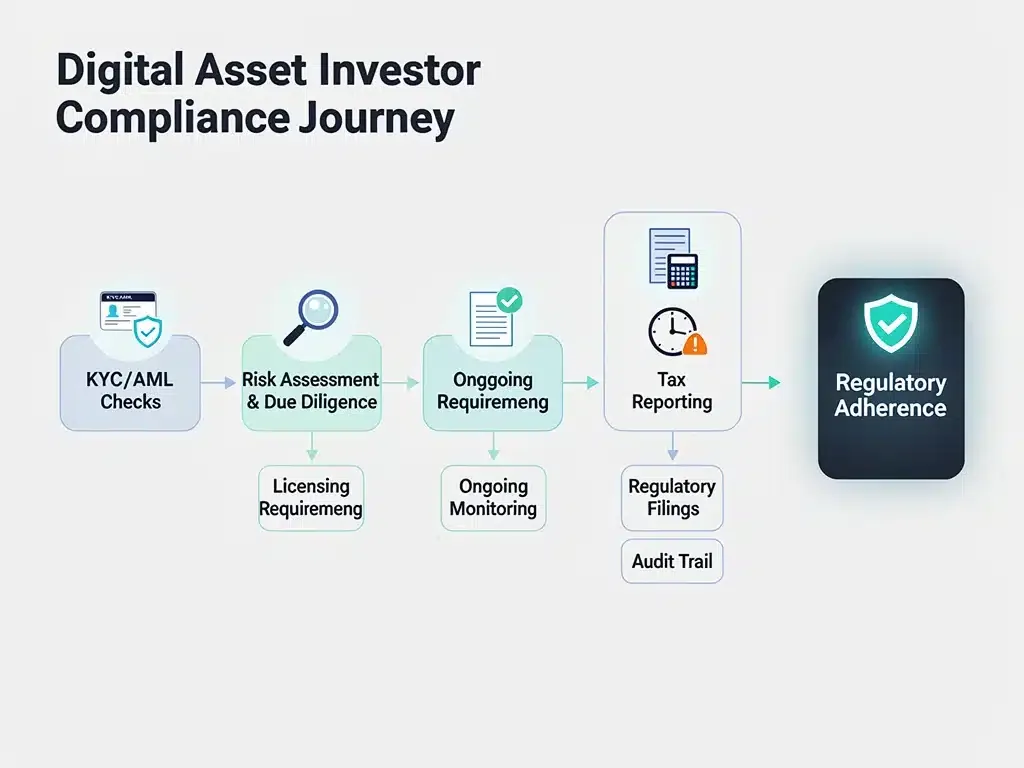
Here is a streamlined breakdown of the three essential compliance steps you need to safeguard your assets and remain fully compliant this year.
The Evolving Landscape of Cryptocurrency Regulation 2026
The regulatory landscape for digital assets is undergoing a profound transformation, with Cryptocurrency Regulation 2026 poised to introduce more stringent requirements.
This shift reflects a global effort to address concerns related to market integrity, consumer protection, and financial stability.
Authorities in the United States, including the SEC, CFTC, and Treasury Department, are actively refining their approaches, moving beyond preliminary guidance to establish comprehensive legal frameworks.
These efforts aim to integrate digital assets more formally into the traditional financial system, bringing both challenges and opportunities for investors.
Understanding these foundational changes is crucial for any digital asset investor.
The direction of these regulations suggests a future where compliance is not merely an option but a mandatory component of participation in the cryptocurrency market.
Key Regulatory Bodies and Their Influence
Several key governmental agencies are shaping the trajectory of Cryptocurrency Regulation 2026.
The Securities and Exchange Commission (SEC) continues to assert jurisdiction over many digital assets, particularly those deemed securities, influencing how offerings and trading platforms operate.
The Commodity Futures Trading Commission (CFTC) oversees derivatives markets involving cryptocurrencies, impacting futures and options trading.
Meanwhile, the Treasury Department, through FinCEN, focuses on anti-money laundering (AML) and combating the financing of terrorism (CFT) measures, mandating rigorous reporting and due diligence.
These agencies often collaborate, but their distinct mandates mean investors must navigate a multifaceted regulatory environment. Staying informed about each body’s pronouncements is essential for comprehensive compliance.
Global Trends Impacting US Policy
International regulatory developments significantly influence the approach to Cryptocurrency Regulation 2026 within the United States.
Jurisdictions like the European Union with its MiCA framework, and various Asian countries, are setting precedents that US policymakers closely observe.
These global trends highlight a convergence towards common principles, such as robust investor protection, market transparency, and clear definitions for different types of digital assets.
The interconnected nature of the global financial system means that US regulations will likely incorporate lessons learned and best practices from abroad.
This global perspective underscores the complexity of the regulatory environment, demanding that investors consider not just domestic rules but also international standards that may eventually shape US policy.
Compliance Step 1: Enhanced KYC and AML Protocols
One of the most critical aspects of Cryptocurrency Regulation 2026 for digital asset investors will be the implementation of enhanced Know Your Customer (KYC) and Anti-Money Laundering (AML) protocols.
Regulators are increasingly focused on preventing illicit activities within the digital asset ecosystem.
This means that exchanges, custodians, and other financial intermediaries dealing with cryptocurrencies will be required to collect more detailed information about their users.
Investors, in turn, must be prepared to provide this data and understand the implications of these stricter identity verification processes.
Failure to comply with these enhanced KYC and AML standards could result in account restrictions, asset freezes, or even legal penalties, making this a foundational step for any investor.
Understanding KYC Requirements
KYC, or Know Your Customer, involves verifying the identity of clients to assess their suitability and the potential risks of illegal intentions.
For Cryptocurrency Regulation 2026, this will extend beyond basic identification to include more sophisticated checks.
Investors can expect requests for government-issued IDs, proof of address, and potentially even source of funds documentation.
These measures are designed to create a transparent trail for transactions, making it harder for bad actors to exploit the system.
It is advisable for investors to maintain up-to-date and easily accessible documentation to streamline these verification processes.
Proactive engagement with these requirements can prevent delays and ensure uninterrupted access to digital asset services.
Navigating AML Obligations
Anti-Money Laundering (AML) regulations are designed to deter and detect financial crime, including money laundering and terrorist financing.
Under Cryptocurrency Regulation 2026, these obligations will place a significant burden on service providers and, indirectly, on investors.
Service providers will implement advanced transaction monitoring systems to flag suspicious activities, which may lead to inquiries directed at investors regarding the nature and purpose of their transactions.
Investors should be prepared to explain the legitimacy of their dealings.
Developing a clear understanding of the origin and destination of your digital assets, and maintaining records of significant transactions, will be vital for demonstrating compliance with AML standards.
Compliance Step 2: Comprehensive Tax Reporting and Accounting
The second crucial compliance step for digital asset investors under Cryptocurrency Regulation 2026 involves comprehensive tax reporting and accurate accounting.
Tax authorities, notably the IRS in the United States, are intensifying their scrutiny of cryptocurrency-related gains and losses.
Investors must be prepared to meticulously track all their digital asset transactions, including purchases, sales, swaps, and even certain staking or lending activities.
The days of ambiguous tax treatment for cryptocurrencies are rapidly drawing to a close, replaced by clearer, albeit more demanding, guidelines.
Accurate record-keeping and timely reporting are paramount to avoid penalties and ensure full compliance with evolving tax laws.
This area represents a significant operational challenge but also an opportunity for robust financial management.
IRS Guidance and Future Changes
The IRS has consistently clarified that cryptocurrency is treated as property for tax purposes, meaning capital gains and losses apply to transactions.
Cryptocurrency Regulation 2026 is expected to solidify and potentially expand this guidance, requiring even more granular reporting.
Future changes may include more explicit rules for various DeFi activities, NFTs, and other emerging digital asset classes.
Investors should anticipate a landscape where every taxable event involving digital assets must be accurately accounted for and reported on annual tax returns.
Staying updated on official IRS publications and seeking professional tax advice is highly recommended to navigate these complexities effectively.
Best Practices for Record-Keeping
Effective record-keeping is the cornerstone of compliant tax reporting for digital assets.
Investors should adopt systematic approaches to track every transaction, including dates, values in fiat currency at the time of the transaction, and the nature of the transaction (e.g., buy, sell, trade, gift).
Utilizing specialized cryptocurrency tax software or maintaining detailed spreadsheets can significantly simplify this process.
These tools can help calculate cost bases, capital gains/losses, and generate reports suitable for tax filing under Cryptocurrency Regulation 2026.
Maintaining a clear audit trail for all digital asset holdings and activities will prove invaluable, not only for tax purposes but also for demonstrating overall financial integrity.
Compliance Step 3: Navigating Licensing and Registration Requirements
The third essential compliance step for digital asset investors under Cryptocurrency Regulation 2026 involves understanding and adhering to potential licensing and registration requirements.
While these typically apply more directly to service providers, certain investor activities may also fall under these mandates.
Depending on the scale and nature of an investor’s activities, particularly those involving active trading, providing liquidity, or operating certain decentralized finance (DeFi) protocols, there could be requirements to register as a money services business (MSB) or other regulated entity.
This represents a significant shift from the earlier, less regulated environment and necessitates a careful assessment of one’s investment strategy against emerging legal definitions.
When Investors Might Need to Register
Individual investors typically do not need to register with financial authorities for simply buying and holding cryptocurrencies.
However, under Cryptocurrency Regulation 2026, certain activities could trigger registration obligations.
For instance, if an investor’s activities resemble those of an exchange, a broker-dealer, or a money transmitter – even on a peer-to-peer basis or through decentralized applications – they might inadvertently cross into regulated territory.
This is particularly relevant for those engaging in high-frequency trading or providing extensive liquidity to DeFi protocols.
Consulting with legal professionals specializing in digital asset law is crucial to determine if specific investment strategies necessitate any form of registration or licensing.
Impact on Decentralized Finance (DeFi)
The advent of comprehensive Cryptocurrency Regulation 2026 poses significant questions for the decentralized finance (DeFi) ecosystem.
Regulators are grappling with how to apply existing laws to inherently permissionless and often anonymous protocols.
While the core philosophy of DeFi emphasizes decentralization, regulatory bodies are likely to target points of control or influence within these protocols, such as developers, front-end operators, or significant liquidity providers.
Investors participating in DeFi should monitor how these regulations evolve to avoid unintended non-compliance.
Understanding the potential for regulatory intervention in DeFi is vital for managing risk and ensuring the longevity of one’s participation in this innovative but complex sector.

Anticipating Future Regulatory Developments in 2026
As we look towards Cryptocurrency Regulation 2026, it’s clear that the regulatory landscape will continue to evolve rapidly.
Beyond the three core compliance steps, investors should anticipate further developments that could introduce new requirements or modify existing ones.
Areas such as stablecoin regulation, central bank digital currencies (CBDCs), and the environmental impact of crypto mining are all under active discussion by policymakers.
These topics could lead to additional rules that impact how digital assets are created, transacted, and held.
Maintaining a proactive stance and continuously educating oneself about these emerging discussions will be key to staying compliant and resilient in the face of ongoing regulatory change.
Stablecoin and CBDC Integration
The regulation of stablecoins is a high priority for many governments, including the United States, given their potential to impact financial stability and monetary policy.
Cryptocurrency Regulation 2026 is expected to provide clearer frameworks for stablecoin issuers, potentially requiring bank-like reserves and auditing.
Concurrently, the exploration of Central Bank Digital Currencies (CBDCs) by various nations, including the US, could reshape the financial ecosystem.
While not directly cryptocurrencies, CBDCs could influence the regulatory approach to private digital assets by setting new standards for digital money.
Investors holding or transacting with stablecoins should prepare for increased scrutiny and potential new requirements regarding their backing and transparency.
Environmental and Social Governance (ESG) Factors
The environmental impact of cryptocurrency, particularly proof-of-work mining, is gaining significant attention from regulators and the public.
Cryptocurrency Regulation 2026 may begin to incorporate ESG factors, potentially leading to disclosure requirements or even restrictions based on energy consumption.
Investors should be aware that the sustainability profile of their digital asset holdings could become a factor in regulatory decisions or public perception. This could influence investment choices and the long-term viability of certain protocols.
Monitoring developments in this area and understanding the energy footprint of different cryptocurrencies will be increasingly important for responsible investing.
The Importance of Professional Guidance
Navigating the complexities of Cryptocurrency Regulation 2026 requires more than just a passing understanding; it often necessitates professional guidance.
The intricate nature of financial law, coupled with the rapid pace of innovation in digital assets, makes expert advice invaluable.
Engaging with legal, tax, and compliance professionals who specialize in the digital asset space can provide clarity, mitigate risks, and ensure that investors are fully prepared for forthcoming changes.
These experts can offer tailored strategies and interpret nuanced regulations.
Relying on professional insights can help investors not only comply with the law but also optimize their strategies within a regulated environment, turning potential hurdles into strategic advantages.
Choosing the Right Legal Counsel
Selecting legal counsel with deep expertise in digital asset law is paramount for investors facing the challenges of Cryptocurrency Regulation 2026.
The legal landscape is highly specialized, and general financial lawyers may not possess the specific knowledge required.
Look for firms or individuals who have a proven track record in advising on blockchain technology, securities law as it applies to digital assets, and international regulatory frameworks.
Their guidance can be instrumental in structuring compliant operations and transactions.
The right legal partner can help interpret complex statutes, advise on risk management, and represent interests in regulatory inquiries, ensuring robust legal protection.
Leveraging Tax and Accounting Specialists
Given the increasing complexity of tax reporting for digital assets, leveraging specialized tax and accounting professionals is a prudent step for investors preparing for Cryptocurrency Regulation 2026.
These specialists can help optimize tax strategies and ensure accurate reporting.
They can assist with calculating cost bases, managing capital gains and losses, and navigating specific IRS forms and requirements related to cryptocurrency. Their expertise is crucial for minimizing tax liabilities while remaining fully compliant.
A dedicated crypto tax accountant can provide invaluable support, helping investors avoid common pitfalls and ensure that all financial activities are transparently and correctly reported.
| Compliance Area | Key Action for Investors |
|---|---|
| KYC/AML Protocols | Prepare for enhanced identity verification and transaction monitoring. |
| Tax Reporting | Meticulously track all transactions and seek specialized tax advice. |
| Licensing Requirements | Assess investment activities for potential registration obligations. |
| Future Regulations | Stay informed on stablecoins, CBDCs, and ESG factors. |
Frequently Asked Questions About Cryptocurrency Regulation 2026
What are the primary changes expected in Cryptocurrency Regulation 2026?▼Primary changes expected in Cryptocurrency Regulation 2026 include enhanced KYC/AML requirements, more comprehensive tax reporting mandates, and potential new licensing obligations for certain digital asset activities. These aim to increase transparency and protect investors within the evolving market.
How will KYC/AML affect individual investors?▼Individual investors will likely face more rigorous identity verification processes and increased scrutiny of transaction origins and destinations. This means providing more detailed personal information and being prepared to explain the legitimacy of significant digital asset movements.
What tax implications should digital asset investors prepare for?▼Investors should prepare for stricter enforcement of existing capital gains taxes on crypto transactions. This requires meticulous record-keeping of all purchases, sales, and swaps, along with accurate reporting on annual tax returns to avoid potential penalties from the IRS.
Could my investment activities require a license under new regulations?▼While generally for service providers, certain extensive investment activities, like operating a high-volume trading platform or specific DeFi roles, might trigger registration requirements. It is crucial to consult legal experts to determine if your activities fall under these evolving mandates.
Where can investors find reliable information on upcoming regulations?▼Reliable information can be found on official government websites (SEC, CFTC, FinCEN, IRS), reputable financial news outlets specializing in digital assets, and through legal or tax professionals. Staying updated through these verified sources is essential for navigating Cryptocurrency Regulation 2026 effectively.
Looking Ahead: Navigating the Future of Digital Asset Compliance
The landscape of Cryptocurrency Regulation 2026 is not static; it is a dynamic environment demanding continuous vigilance from digital asset investors.
The three compliance steps outlined—enhanced KYC/AML, comprehensive tax reporting, and awareness of licensing requirements—form the bedrock of responsible participation.
As regulatory bodies refine their approaches and introduce new frameworks, proactive engagement and reliance on professional expertise will be indispensable.
Investors and issuers can track these policy updates directly through official releases, such as the proposed regulatory framework announced by the U.S. Securities and Exchange Commission (SEC).
The ongoing evolution signifies a maturing industry where compliance is integral to long-term success, ensuring both market integrity and investor confidence.