Corporate Bond Ladders: Capturing 5.4% Yields Explained
Advertisements
Latest developments on Corporate Bond Ladders: Capturing 5.4% Yields with Investment-Grade Debt Instruments, with key facts, verified sources and what readers need to monitor next in the United States, presented clearly in English (United States).
Corporate Bond Ladders: Capturing 5.4% Yields with Investment-Grade Debt Instruments is shaping today’s investment agenda, offering a structured approach to fixed-income portfolios. This strategy is gaining traction among investors seeking both income stability and attractive returns in the current economic climate.
The focus on investment-grade debt instruments within a bond ladder framework aims to mitigate risk while optimizing yield potential. Understanding the mechanics and benefits of this approach is crucial for those looking to enhance their fixed-income allocations.
This article provides an in-depth look at how Corporate Bond Ladders function, the advantages they offer, and key considerations for implementation. We will explore how investors can strategically capture competitive yields while managing market volatility effectively.
Understanding Corporate Bond Ladders: A Strategic Overview
Corporate Bond Ladders represent a sophisticated yet accessible strategy for managing fixed-income investments, particularly in an environment of fluctuating interest rates. By staggering bond maturities, investors can consistently reinvest maturing principal at prevailing rates, optimizing their yield over time.
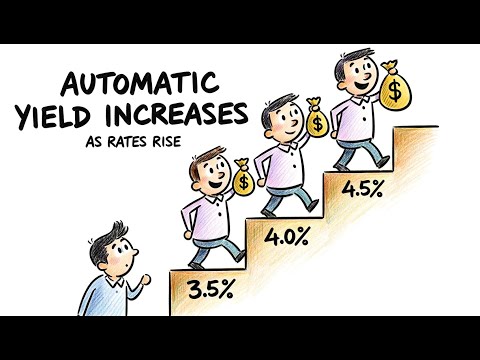
This method inherently reduces the impact of interest rate changes on an entire portfolio, offering a smoother return profile compared to a single-bond investment. The objective is to provide a continuous stream of income while maintaining liquidity and capital preservation.
For those targeting specific yield benchmarks, such as the 5.4% currently achievable with investment-grade debt, a Corporate Bond Ladder can be a highly effective tool. It allows for systematic adjustments to market conditions without forced liquidation of long-term holdings.
The Mechanics of a Bond Ladder
A Corporate Bond Ladder involves purchasing multiple bonds with different maturity dates, typically spread out evenly over a period, such as one to five years. As each bond matures, the principal is reinvested into a new bond at the longest end of the ladder, perpetuating the income stream.
This systematic reinvestment ensures that a portion of the portfolio is always exposed to current interest rates. It prevents the entire portfolio from being locked into lower yields during periods of rising rates, while also providing regular access to capital.
The construction of a bond ladder requires careful selection of investment-grade corporate bonds, focusing on credit quality and diversification. This meticulous approach helps safeguard against default risk while aiming for the targeted yield.
- Staggered Maturities: Bonds mature at regular intervals, typically annually, for continuous reinvestment.
- Consistent Income Stream: Regular principal returns allow for ongoing income generation.
- Interest Rate Risk Management: Mitigates the impact of rate fluctuations on the overall portfolio.
- Liquidity: Provides periodic access to capital as bonds mature.
Capturing 5.4% Yields: The Current Opportunity
The current market environment presents a unique opportunity for investors to capture attractive yields, specifically around 5.4%, through carefully constructed Corporate Bond Ladders. This yield level is particularly compelling for investment-grade debt, which historically offers a balance of risk and return.
Recent shifts in monetary policy and economic conditions have pushed corporate bond yields higher, making fixed-income investments more appealing. Investors who leverage a bond ladder can lock in these favorable rates for various durations, securing a predictable income stream.
This window of opportunity encourages a proactive approach to portfolio construction, allowing investors to capitalize on elevated yields before potential future rate adjustments. The strategic deployment of a Corporate Bond Ladder ensures continuous engagement with these higher yield levels.
Why 5.4% is Significant Now
A 5.4% yield on investment-grade corporate debt represents a substantial return in the current landscape, especially when compared to historical averages or other low-risk asset classes. This level of return can significantly boost a portfolio’s overall income generation.
For many years, investors faced a challenging environment of historically low interest rates, making it difficult to find meaningful yields without taking on excessive risk. The present situation offers a distinct advantage, allowing for more robust income targets.
Securing a 5.4% yield through Corporate Bond Ladders provides a compelling argument for re-evaluating fixed-income allocations. It allows investors to enhance their portfolio's income potential while adhering to prudent risk management principles.
- Attractive Returns: A 5.4% yield offers a competitive return compared to many other fixed-income options.
- Market Conditions: Current economic factors support these higher yields for investment-grade corporate bonds.
- Income Enhancement: Significant boost to overall portfolio income generation.
- Risk-Adjusted Value: High yield combined with the relative safety of investment-grade ratings.
Investment-Grade Debt Instruments: The Foundation of Security
The cornerstone of an effective Corporate Bond Ladder strategy, particularly one aiming for 5.4% yields, lies in the exclusive use of investment-grade debt instruments. These bonds are issued by financially stable corporations with strong credit ratings, indicating a lower risk of default.
Focusing on investment-grade debt provides a crucial layer of security, making the bond ladder a more resilient and trustworthy investment vehicle. This commitment to quality helps protect capital while still allowing for attractive income generation.
By selecting bonds from companies with robust balance sheets and proven track records, investors can build a Corporate Bond Ladder that offers both compelling yields and peace of mind. This foundation is essential for long-term financial planning.
Defining Investment-Grade Quality
Investment-grade bonds are typically rated BBB- or higher by Standard & Poor's and Fitch, or Baa3 or higher by Moody's. These ratings signify that the issuing corporation has a strong capacity to meet its financial commitments, including principal and interest payments.
These bonds are often favored by institutional investors, pension funds, and conservative individual investors due to their perceived safety. The rigorous analysis conducted by credit rating agencies provides an independent assessment of an issuer's financial health.
Integrating these high-quality instruments into a Corporate Bond Ladder strategy ensures that the pursuit of a 5.4% yield does not come at the expense of excessive credit risk. This balanced approach is key to sustainable fixed-income investing.

Benefits of Implementing a Corporate Bond Ladder
Implementing a Corporate Bond Ladder offers several distinct advantages for investors, extending beyond just capturing attractive yields. This structured approach provides enhanced control over interest rate risk, improved liquidity, and a predictable income stream, which are critical for long-term financial planning.
The diversified maturity profile inherent in a bond ladder helps smooth out returns, making the portfolio less susceptible to sudden market shifts. This stability is particularly valuable in today's dynamic economic landscape, where volatility remains a constant factor.
Furthermore, a Corporate Bond Ladder simplifies reinvestment decisions, as maturing principal automatically becomes available for new bond purchases at current market rates. This systematic process reduces the need for constant market timing.
Managing Interest Rate Risk Effectively
One of the primary benefits of a Corporate Bond Ladder is its effectiveness in managing interest rate risk. When interest rates rise, the value of existing bonds typically falls; however, with a ladder, only a portion of the portfolio is affected at any given time.
As shorter-term bonds mature, the principal can be reinvested into new, higher-yielding bonds at the longer end of the ladder. This mechanism allows the portfolio to gradually benefit from rising rates without incurring significant capital losses across the entire holding.
Conversely, in a declining interest rate environment, the ladder ensures that a portion of the portfolio remains invested in longer-term bonds, preserving higher yields for a longer duration. This balanced exposure helps cushion against the impact of falling rates.
- Mitigates Rate Volatility: Spreads out interest rate risk across multiple maturities.
- Adapts to Rising Rates: Allows reinvestment at higher yields as bonds mature.
- Protects Against Falling Rates: Longer-term bonds lock in yields for extended periods.
- Consistent Reinvestment: Simplifies the process of adjusting to new market conditions.
Constructing Your Corporate Bond Ladder: Key Considerations
Constructing an effective Corporate Bond Ladder requires careful planning and consideration of several key factors to align with individual financial goals. The duration of the ladder, the number of rungs, and the specific bonds selected are all crucial elements that influence its performance and risk profile.
Investors must assess their liquidity needs, risk tolerance, and income objectives before building their ladder. A well-designed Corporate Bond Ladder should provide the desired yield while maintaining an appropriate level of safety and flexibility.
It is also important to regularly review and adjust the ladder as market conditions evolve and personal circumstances change. This dynamic approach ensures the strategy remains optimized for current opportunities, such as capturing 5.4% yields.
Choosing the Right Duration and Rungs
The duration of a Corporate Bond Ladder refers to the overall time horizon of the bonds within it, typically ranging from a few years to a decade or more. A shorter ladder offers more liquidity and faster adaptation to interest rate changes, while a longer ladder can lock in higher yields for extended periods.
The number of rungs, or distinct maturity dates, also plays a significant role. More rungs mean smaller portions of the portfolio mature at any given time, further smoothing out interest rate risk and providing more frequent reinvestment opportunities.
For investors targeting a 5.4% yield with investment-grade debt, a ladder with intermediate-term bonds (3-7 years) might be ideal, balancing attractive yields with manageable interest rate sensitivity. Careful consideration of these elements is paramount.
Risks Associated with Corporate Bond Ladders
While Corporate Bond Ladders offer significant benefits, particularly in capturing attractive yields from investment-grade debt, they are not entirely without risk. Investors must understand these potential downsides to make informed decisions and manage their expectations effectively.
Market fluctuations, credit risk, and inflation can all impact the performance of a bond ladder, even one constructed with high-quality instruments. A thorough understanding of these risks allows for a more robust and resilient investment strategy.
Despite the inherent stability of investment-grade bonds, external economic factors can still influence their value and the overall effectiveness of the ladder. It is important to approach Corporate Bond Ladders with a balanced perspective.
Understanding Credit and Reinvestment Risk
Even with investment-grade bonds, there is always a degree of credit risk, meaning the possibility that an issuer could default on its payments. While this risk is significantly lower for investment-grade companies, it is never entirely absent, and diversification across multiple issuers is crucial.
Reinvestment risk is another key consideration. When bonds mature, the principal must be reinvested at prevailing market rates. If interest rates have fallen significantly, the new bonds purchased at the long end of the ladder may offer lower yields, potentially reducing the overall portfolio income.
This risk is particularly relevant for those relying on a consistent 5.4% yield from their Corporate Bond Ladders. While the ladder structure helps mitigate this, it does not eliminate the possibility of reinvesting at lower rates during extended periods of declining yields.
- Credit Risk: Potential for issuer default, though minimized with investment-grade bonds.
- Reinvestment Risk: Risk of lower yields when reinvesting maturing principal during falling rate environments.
- Inflation Risk: Rising inflation can erode the purchasing power of fixed income payments.
- Liquidity Risk: While ladders provide periodic liquidity, selling bonds before maturity might incur losses.

Comparing Corporate Bond Ladders to Other Fixed-Income Strategies
When considering fixed-income investments, Corporate Bond Ladders stand out as a distinctive strategy, particularly for those targeting specific yields like 5.4% from investment-grade debt. It is helpful to compare this approach to other common fixed-income strategies to understand its unique advantages and suitability.
Unlike simply holding individual bonds to maturity, a ladder provides dynamic management of interest rate risk and liquidity. It offers a structured alternative to bond funds or individual long-term bond holdings, each with its own set of pros and cons.
Understanding these comparisons helps investors determine if a Corporate Bond Ladder aligns best with their financial objectives and risk tolerance. The choice often depends on an investor's desire for control, income stability, and adaptability to market changes.
Ladders vs. Bond Funds and Individual Bonds
Bond funds offer diversification and professional management, but investors give up direct control over individual bond selections and maturity dates. They are also subject to management fees and can experience capital fluctuations based on market value changes of underlying bonds.
Holding individual bonds to maturity provides certainty of principal return and a fixed income stream, but it exposes the investor to significant interest rate risk if rates rise. Selling before maturity might result in losses, and managing multiple individual bonds can be time-consuming.
A Corporate Bond Ladder, on the other hand, combines elements of both. It offers a degree of diversification, manages interest rate risk through staggered maturities, and provides periodic liquidity and control over reinvestment. This hybrid approach often appeals to investors seeking a balance.
- Bond Funds: Diversification, professional management, but less control and subject to fees.
- Individual Bonds: Direct control, fixed income, but high interest rate risk if held without a ladder.
- Corporate Bond Ladders: Balances control, risk management, and liquidity, optimizing for yield.
Market Outlook and Future Prospects for Bond Ladders
The current market outlook suggests continued relevance and potential for Corporate Bond Ladders, especially for investors focused on capturing attractive yields like 5.4% from investment-grade debt. Economic indicators and central bank policies continue to shape the fixed-income landscape, creating ongoing opportunities.
As inflation trends and growth forecasts evolve, the flexibility of a bond ladder allows investors to adapt to new realities. This adaptability ensures that the strategy remains effective in a variety of economic environments, providing resilience to portfolios.
Looking ahead, Corporate Bond Ladders are expected to remain a valuable tool for income-focused investors. Their ability to provide consistent income and manage interest rate risk positions them favorably for future market conditions.
Adapting to Economic Shifts
The Federal Reserve's stance on interest rates, inflation data, and broader economic growth projections will continue to influence corporate bond yields. A Corporate Bond Ladder, by its very design, is well-equipped to navigate these shifts.
Should interest rates continue to rise, maturing bonds can be reinvested at even higher yields, further enhancing the portfolio's income. Conversely, if rates stabilize or decline, the longer-term bonds within the ladder will help preserve existing yields.
This inherent adaptive quality makes Corporate Bond Ladders a robust strategy for investors seeking to maintain a target yield while responding to evolving economic landscapes. The focus on investment-grade debt also adds a layer of stability.
| Key Point | Brief Description |
|---|---|
| Strategy Focus | Staggered bond maturities to manage risk and optimize yield. |
| Yield Target | Opportunity to capture 5.4% yields with investment-grade debt. |
| Risk Management | Mitigates interest rate and reinvestment risk through structure. |
| Investment Quality | Relies exclusively on high-rated, investment-grade corporate bonds. |
Frequently Asked Questions About Corporate Bond Ladders
What exactly are Corporate Bond Ladders?▼Corporate Bond Ladders are investment strategies where you buy multiple corporate bonds with staggered maturity dates. As each bond matures, the principal is reinvested into a new bond at the longest end of the ladder, creating a continuous income stream and managing interest rate risk.
How can investors capture 5.4% yields with this strategy?▼Current market conditions, influenced by economic factors and monetary policy, have led to higher yields on investment-grade corporate debt. By strategically selecting these bonds within a ladder structure, investors can lock in these attractive rates, aiming for a 5.4% yield.
What are the main benefits of using investment-grade debt in a bond ladder?▼Using investment-grade debt ensures a higher level of credit quality, meaning the issuing companies have a strong capacity to meet their payment obligations. This reduces default risk, making the bond ladder a more secure strategy while still offering competitive yields.
How do Corporate Bond Ladders manage interest rate risk?▼By staggering maturities, only a portion of the portfolio is exposed to current interest rates at any given time. This allows for systematic reinvestment at prevailing rates, mitigating the impact of rising or falling interest rates on the entire portfolio's value and income.
Are there any risks associated with Corporate Bond Ladders?▼Yes, while generally considered safe, risks include credit risk (even for investment-grade bonds), reinvestment risk (if future rates are lower), and inflation risk, which can erode purchasing power. Diversification and careful bond selection help mitigate these concerns.
Looking Ahead
The strategic deployment of Corporate Bond Ladders remains a compelling option for investors seeking to capture attractive yields, such as the 5.4% currently available from investment-grade debt instruments. As economic conditions continue to evolve, the inherent flexibility and risk-management capabilities of this strategy position it as a valuable component of a diversified fixed-income portfolio. Monitoring market dynamics and adjusting the ladder as needed will be key to maximizing its benefits in the coming months. This approach offers a robust framework for income generation and capital preservation.