Inflation Concerns Drive Federal Reserve to Consider 0.50% Rate Hike by November 2026
Advertisements
Latest developments indicate that Inflation Concerns Drive Federal Reserve to Consider 0.50% Rate Hike by November 2026, with key facts, verified sources, and what readers need to monitor next in the United States, presented clearly.
Inflation Concerns Drive Federal Reserve to Consider 0.50% Rate Hike by November 2026 is shaping today’s financial agenda, with new details emerging from Federal Reserve officials and economic analysts. This potential policy shift could significantly impact borrowing costs, investment strategies, and overall economic stability across the nation.
The discussion around this rate hike reflects ongoing efforts to temper persistent inflationary pressures that have affected household budgets and business operations. Understanding the nuances of the Federal Reserve’s considerations is crucial for anyone navigating the current economic landscape.
This report prioritizes what has changed, why it matters, and what to watch next, offering a straightforward news format to keep you informed about these critical developments.
Understanding the Federal Reserve’s Stance on Inflation
The Federal Reserve’s primary mandate includes maintaining price stability and maximizing employment. Recent economic data, particularly concerning consumer price index (CPI) and producer price index (PPI) figures, has signaled that inflation remains a persistent challenge, prompting serious discussions about future monetary policy adjustments.
Policymakers are carefully weighing the risks of allowing inflation to become entrenched against the potential for an overly aggressive tightening to stifle economic growth. This delicate balancing act forms the core of the Federal Reserve’s current deliberations.
The possibility that Inflation Concerns Drive Federal Reserve to Consider 0.50% Rate Hike by November 2026 underscores the central bank’s commitment to its inflation targets, even if it means implementing measures that could slow economic activity.
The Economic Indicators Fueling Rate Hike Discussions
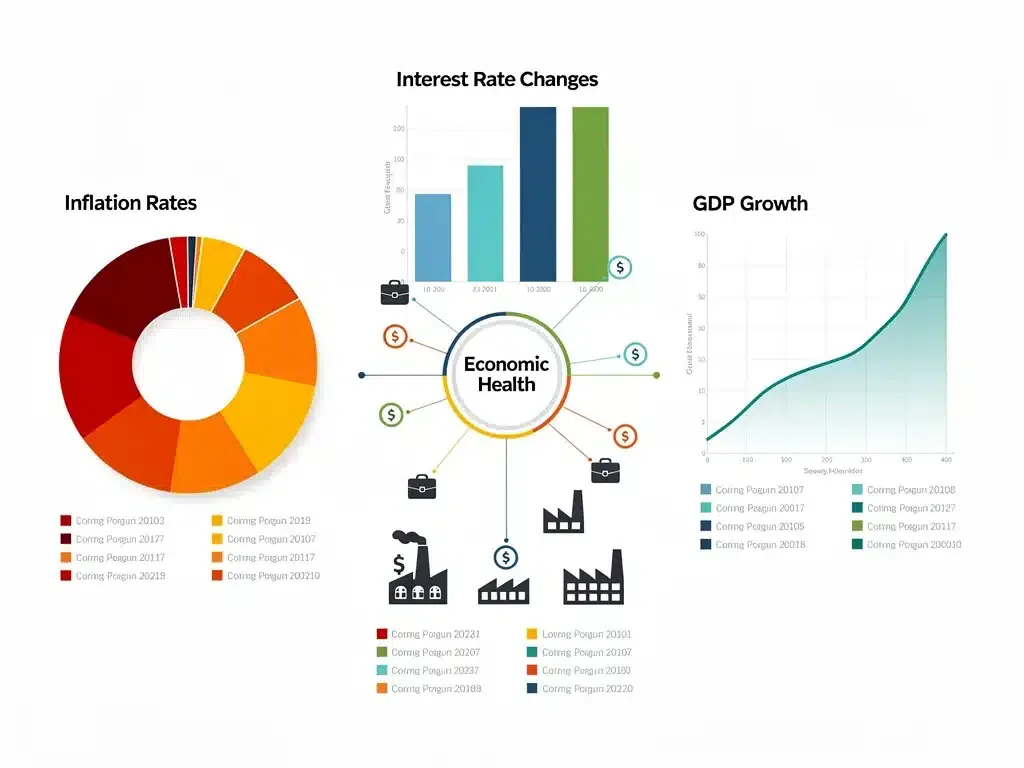
Several key economic indicators are heavily influencing the Federal Reserve’s outlook and the growing consideration for a rate hike. These data points provide a comprehensive picture of the current economic health and future inflationary pressures.
Consumer spending, wage growth, and global supply chain dynamics are all under intense scrutiny. Persistent strength in these areas, coupled with geopolitical uncertainties, suggests that inflationary forces may not dissipate as quickly as initially hoped.
The ongoing strength of the labor market, while positive for employment, also contributes to inflationary pressures through increased wage demands, further solidifying the view that Inflation Concerns Drive Federal Reserve to Consider 0.50% Rate Hike by November 2026.
Key Inflationary Pressures
- Persistent Consumer Demand: Strong consumer spending continues to outpace supply in some sectors, driving up prices.
- Wage-Price Spiral Concerns: Rising wages, while beneficial for workers, can lead businesses to increase prices to maintain profit margins.
- Geopolitical Factors: Global events and supply chain disruptions continue to exert upward pressure on commodity prices and shipping costs.
- Housing Market Dynamics: Rising housing costs, both rentals and home prices, significantly contribute to overall inflation metrics.
Timeline and Probability: A 0.50% Hike by November 2026
The timeline of November 2026 for a potential 0.50% rate hike is not arbitrary; it reflects the Federal Reserve’s forward-looking approach and its assessment of how long current inflationary trends might persist. This projection allows markets and businesses to prepare for potential shifts.
While no decision is final, the discussion around this specific timing suggests that policymakers anticipate inflation will remain elevated enough to warrant further action within the next two years. This long-term view helps guide expectations and reduce market volatility.
The probability of such a hike is currently being priced into futures markets, indicating that investors are increasingly acknowledging that Inflation Concerns Drive Federal Reserve to Consider 0.50% Rate Hike by November 2026 is a serious possibility, not just a remote one.
Impact on Consumers and Businesses Across the US
A 0.50% rate hike by the Federal Reserve would have widespread implications for both consumers and businesses. Understanding these potential impacts is crucial for financial planning and strategic decision-making in the coming years.
For consumers, borrowing costs on everything from mortgages and auto loans to credit card debt would likely increase, making financing more expensive. This could lead to a slowdown in discretionary spending and a re-evaluation of major purchases.
Businesses, particularly those reliant on borrowing for expansion or operational needs, would face higher financing costs, potentially impacting investment decisions and hiring plans. The fact that Inflation Concerns Drive Federal Reserve to Consider 0.50% Rate Hike by November 2026 means these sectors need to prepare.
Consumer and Business Repercussions
- Higher Borrowing Costs: Mortgages, car loans, and credit card interest rates would likely rise, increasing monthly payments.
- Reduced Consumer Spending: Increased debt service costs could lead to less disposable income, dampening retail sales and economic growth.
- Business Investment Slowdown: Higher cost of capital might delay or cancel expansion plans, affecting job creation.
- Impact on Savings: While borrowing becomes more expensive, savings accounts and CDs might offer slightly higher returns, benefiting savers.
Historical Context: Fed’s Response to Inflation
The Federal Reserve has a long history of adjusting interest rates to combat inflation, with varying degrees of success and economic fallout. Reviewing past cycles can offer insights into the potential strategies and challenges ahead.
From the aggressive rate hikes of the Volcker era in the early 1980s to more recent, gradual adjustments, the Fed’s approach has always been tailored to the specific economic conditions of the time. These historical precedents inform current policy debates.
Understanding these past responses helps contextualize why Inflation Concerns Drive Federal Reserve to Consider 0.50% Rate Hike by November 2026 is a significant development, reflecting a persistent battle against price instability.
Market Reactions and Investor Outlook
Financial markets are highly sensitive to signals from the Federal Reserve, and the prospect of a 0.50% rate hike by November 2026 is already influencing investor behavior. Equity markets, bond yields, and currency valuations are all subject to shifts based on these expectations.
Higher interest rates typically make bonds more attractive relative to stocks, potentially leading to capital rotation. Companies with high debt loads may see their stock prices pressured as their borrowing costs increase.
Investors are closely monitoring economic data releases and Federal Reserve communications for further clues, as the potential for Inflation Concerns Drive Federal Reserve to Consider 0.50% Rate Hike by November 2026 creates both risks and opportunities across different asset classes.
Alternative Scenarios and Policy Flexibility
While the discussion centers on a 0.50% rate hike, the Federal Reserve maintains flexibility in its monetary policy. Economic conditions are dynamic, and future data could lead to different policy paths.
Should inflation unexpectedly recede more rapidly, the Fed might opt for smaller adjustments or even pause rate increases. Conversely, if inflation proves more stubborn, more aggressive measures could be considered.
This adaptability is crucial for the central bank to effectively respond to evolving economic realities. The fact that Inflation Concerns Drive Federal Reserve to Consider 0.50% Rate Hike by November 2026 is a strong consideration, but not a foregone conclusion, highlights this flexibility.
The Global Economic Context and US Monetary Policy
US monetary policy does not operate in a vacuum; global economic conditions significantly influence the Federal Reserve’s decisions. International trade, geopolitical stability, and the economic performance of major trading partners all play a role.
A rate hike in the US can strengthen the dollar, impacting global trade balances and capital flows. This interconnectedness means the Fed must consider international ramifications when setting domestic policy.
The global fight against inflation is a shared challenge, and actions by other central banks can also influence the Federal Reserve’s strategy. Therefore, Inflation Concerns Drive Federal Reserve to Consider 0.50% Rate Hike by November 2026 is part of a broader, interconnected global economic narrative.
| Key Point | Brief Description |
|---|---|
| Rate Hike Possibility | Federal Reserve considering a 0.50% rate hike by November 2026 due to inflation. |
| Driving Factor | Persistent inflation concerns are the primary reason for this policy consideration. |
| Economic Impact | Higher borrowing costs for consumers and businesses, potential market shifts. |
| Market Outlook | Investors are adjusting portfolios in anticipation of future monetary tightening. |
Frequently Asked Questions About the Fed’s Rate Hike
Why is the Federal Reserve considering another rate hike?▼The Federal Reserve is considering another rate hike primarily due to persistent inflation concerns. Despite previous tightening cycles, price pressures in the economy remain elevated, particularly in sectors like housing and services. The central bank aims to bring inflation back down to its 2% target to ensure long-term economic stability and protect purchasing power for consumers.
How would a 0.50% rate hike impact my mortgage?▼A 0.50% rate hike would likely increase interest rates on new variable-rate mortgages and could indirectly affect fixed-rate mortgages by pushing up bond yields. For existing variable-rate mortgage holders, monthly payments would increase. Those looking to buy a home might face higher borrowing costs, potentially reducing affordability and slowing down the housing market.
When is this rate hike expected to occur?▼The current discussion centers on the Federal Reserve considering a 0.50% rate hike by November 2026. This timeline allows policymakers to assess incoming economic data, including inflation reports and employment figures, before making a definitive decision. The exact timing remains subject to evolving economic conditions and the Fed’s assessment of price stability.
What does this mean for the US economy overall?▼A rate hike aims to cool down an overheating economy by making borrowing more expensive, which can reduce demand and inflationary pressures. While it helps combat inflation, it could also slow economic growth, potentially leading to higher unemployment. The Fed seeks a ‘soft landing,’ reducing inflation without triggering a recession, a challenging balance to achieve.
How should consumers prepare for potential rate increases?▼Consumers should review their personal finances, especially any variable-rate debt like credit cards or adjustable-rate mortgages. Consider consolidating high-interest debt or paying down balances to reduce exposure to rising rates. Building an emergency fund and reassessing investment portfolios for resilience against economic shifts are also prudent steps to take in anticipation of future rate hikes.
Looking Ahead: Navigating Future Economic Shifts
The ongoing deliberation where Inflation Concerns Drive Federal Reserve to Consider 0.50% Rate Hike by November 2026 signals a continued period of vigilance from the central bank. This potential move underscores the Fed’s commitment to price stability, even as it navigates a complex economic landscape.
For individuals and businesses, staying informed about economic indicators and Federal Reserve announcements will be crucial. Adapting financial strategies to account for potentially higher borrowing costs and evolving market conditions is a key takeaway from these developments.
The coming months will provide more clarity on the Fed’s path, but the current signals suggest a proactive stance against persistent inflation, shaping the economic outlook for the foreseeable future.