Treasury Bill Ladders in 2026: Lock 4.2% Yields, Zero State Tax
Advertisements
Latest developments on Treasury Bill Ladders in 2026: Locking in 4.2% Yields with Zero State Income Tax, with key facts, verified sources and what readers need to monitor next in Estados Unidos, presented clearly in Inglês (Estados Unidos) (en-US).
Treasury Bill Ladders in 2026: Locking in 4.2% Yields with Zero State Income Tax is shaping today’s agenda with new details released by officials and industry sources. This update prioritizes what changed, why it matters and what to watch next, in a straightforward news format.
Recent financial analyses highlight a significant opportunity for investors: strategically utilizing Treasury Bill Ladders in 2026: Locking in 4.2% Yields with Zero State Income Tax. This approach allows individuals to secure competitive returns while minimizing their state tax burden, an increasingly attractive prospect in the current economic climate.
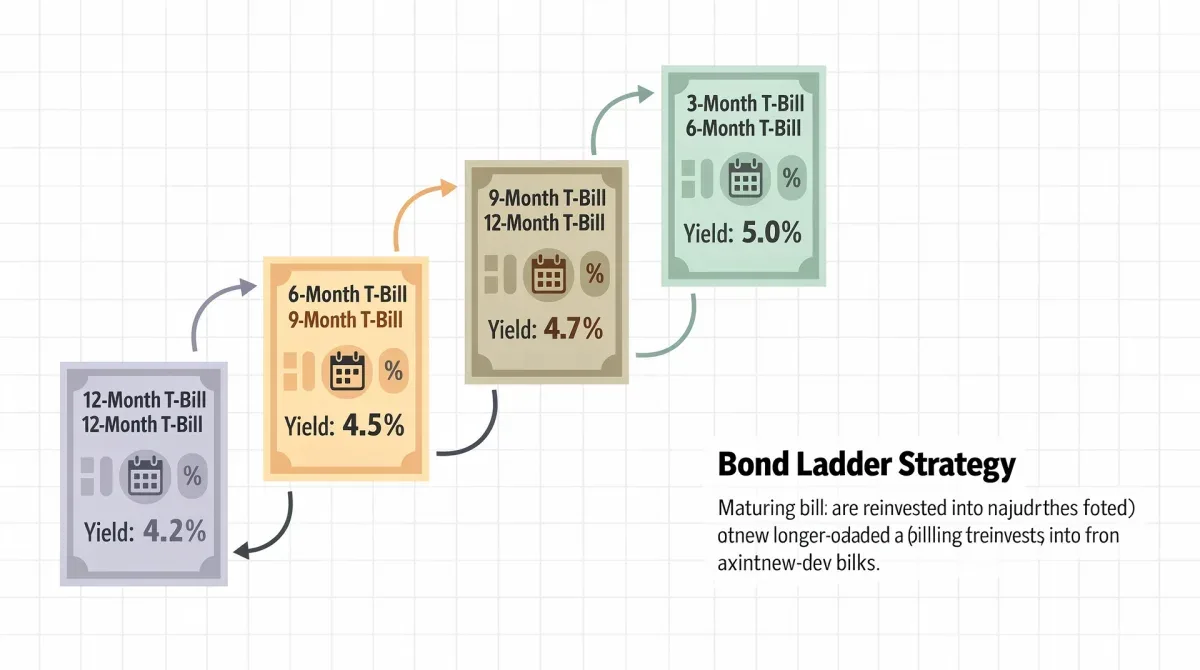
The concept of a Treasury Bill ladder involves staggering investments across various maturity dates, creating a consistent stream of income as bills mature and are reinvested. This method not only offers liquidity but also capitalizes on potential future interest rate changes, providing a flexible and robust investment framework.
As 2026 approaches, the focus intensifies on these instruments due to their favorable yield environment and tax advantages, making them a cornerstone for conservative yet effective financial planning. Understanding the nuances of this strategy is paramount for those aiming to optimize their portfolios.
Understanding Treasury Bill Ladders: A Core Strategy for 2026
The foundation of effective fixed-income investing often lies in strategic planning, and Treasury Bill Ladders in 2026: Locking in 4.2% Yields with Zero State Income Tax exemplifies this principle. By diversifying maturity dates, investors can mitigate interest rate risk, a crucial consideration in today's dynamic financial landscape.

This laddering technique ensures that a portion of an investor's capital regularly becomes available, allowing for reinvestment at prevailing market rates. This systematic approach helps smooth out returns over time, providing a more predictable income stream compared to holding a single, long-term bond.
Furthermore, the inherent safety of Treasury Bills, backed by the full faith and credit of the U.S. government, makes them an attractive option for those prioritizing capital preservation. The combination of security, yield, and tax efficiency positions them strongly for 2026.
The Mechanism of a Treasury Bill Ladder
A Treasury Bill ladder typically involves purchasing bills with maturities ranging from a few weeks to several months or even a year. For instance, an investor might buy bills maturing in 3, 6, 9, and 12 months.
As each bill matures, the proceeds are then used to purchase a new bill at the longest end of the ladder, maintaining the staggered structure. This continuous rotation ensures that the investor always has some capital maturing soon, ready for reinvestment or use.
- Staggered Maturities: Spreads investments across different time frames to manage risk.
- Consistent Reinvestment: Proceeds from maturing bills are reinvested into new, longer-term bills.
- Liquidity Management: Provides regular access to capital, enhancing portfolio flexibility.
The systematic nature of this strategy reduces the impact of short-term interest rate fluctuations. It ensures that investors are not locked into a single rate for an extended period, allowing them to benefit from rising rates over time.
The Appeal of 4.2% Yields in the Current Climate
The prospect of securing a 4.2% yield from Treasury Bills in 2026 is a significant draw for many investors, particularly when considering the broader economic environment. This yield level offers a compelling return, especially for an investment vehicle renowned for its minimal risk profile.
In a period marked by inflation concerns and market volatility, a guaranteed return of 4.2% from a government-backed security provides a strong anchor for any portfolio. This stability is often sought by those looking to preserve capital while still achieving respectable growth.
Analysts indicate that sustained demand for short-term government debt, coupled with the Federal Reserve's monetary policy trajectory, contributes to these attractive yields. The market consensus points to these rates remaining competitive through 2026.
Factors Influencing Treasury Bill Yields
Several key factors contribute to the current and projected yields for Treasury Bills. The Federal Reserve's benchmark interest rate plays a primary role, as T-bill yields tend to move in tandem with the federal funds rate.
Inflation expectations also impact yields; investors demand higher returns to compensate for the erosion of purchasing power. Global economic conditions and the overall supply and demand for government debt further influence these rates, creating a complex interplay of forces.
- Federal Reserve Policy: Direct influence on short-term rates and market expectations.
- Inflation Outlook: Higher inflation typically leads to higher yield demands.
- Market Demand: Investor appetite for safe-haven assets impacts pricing and yields.
The global economic outlook for 2026, including projections for growth and stability, will continue to shape investor sentiment. As such, monitoring these macroeconomic indicators is essential for understanding future yield movements.
Zero State Income Tax: A Significant Advantage
One of the most compelling aspects of investing in Treasury Bill Ladders in 2026: Locking in 4.2% Yields with Zero State Income Tax is the inherent tax advantage. While federal income tax applies to Treasury Bill interest, it is exempt from state and local income taxes, offering a substantial benefit to investors in higher-tax states.
This exemption can significantly enhance the net return on investment, particularly for individuals residing in states with high income tax rates. The effective yield, after accounting for state taxes, becomes considerably more attractive when compared to other taxable fixed-income options.

For many, this tax-free status at the state level is a primary motivator for allocating a portion of their portfolio to Treasury Bills. It represents a tangible saving that directly impacts their overall financial well-being.
Maximizing After-Tax Returns
Investors often overlook the impact of state and local taxes when evaluating investment opportunities, but with Treasury Bills, the benefit is clear. The interest earned on these instruments is explicitly exempt from taxation at the state and local levels.
This makes Treasury Bills particularly advantageous for residents of states like California, New York, or Massachusetts, where state income tax rates can be substantial. The effective yield for these investors can be notably higher than a comparable taxable investment.
Financial advisors frequently recommend leveraging this tax benefit as part of a comprehensive tax-efficient investment strategy. It’s a straightforward way to boost after-tax income without taking on additional risk.
Implementing a Treasury Bill Ladder: Practical Steps
For investors looking to capitalize on Treasury Bill Ladders in 2026: Locking in 4.2% Yields with Zero State Income Tax, understanding the practical steps for implementation is crucial. While the concept is straightforward, proper execution ensures maximum benefit and adherence to individual financial goals.
The process typically begins with determining the total capital to be allocated and the desired maturity intervals for the ladder. This foundational planning helps establish a clear framework for purchasing and reinvesting the Treasury Bills.
Utilizing platforms like TreasuryDirect or working with brokerage firms can streamline the purchasing process, providing access to various maturities and facilitating automatic reinvestment options. These tools simplify managing the ladder effectively.
Step-by-Step Guide to Building Your Ladder
The first step involves deciding on the number of 'rungs' in your ladder and the time interval between them. Common intervals include 3, 6, 9, and 12 months, but this can be adjusted based on liquidity needs and market outlook.
Next, allocate your total investment amount evenly across these maturities. For example, if you have $100,000 to invest and choose a four-rung ladder, you would initially invest $25,000 in each maturity.
- Define Investment Capital: Determine the total funds available for the ladder.
- Select Maturity Intervals: Choose appropriate durations for the T-bills in your ladder.
- Purchase Initial Bills: Acquire T-bills with staggered maturities to form the ladder's base.
- Automate Reinvestment: Set up automatic reinvestment to maintain the ladder structure.
As each bill matures, the proceeds are then reinvested into a new bill at the longest end of your chosen maturity spectrum. This ensures the ladder continuously rolls forward, maintaining its structure and income stream.
Comparing T-Bills to Other Fixed-Income Options
When considering Treasury Bill Ladders in 2026: Locking in 4.2% Yields with Zero State Income Tax, it is essential to compare them against other fixed-income alternatives. This comparison highlights the unique advantages and helps investors make informed decisions based on their risk tolerance and financial objectives.
Corporate bonds, municipal bonds, and certificates of deposit (CDs) each offer distinct characteristics that may appeal to different investor profiles. However, T-bills often stand out for their unparalleled safety and specific tax benefits.
While some alternatives might offer slightly higher nominal yields, the combination of federal backing and state tax exemption often makes Treasury Bills more attractive on an after-tax, risk-adjusted basis. This comprehensive view is crucial for optimal portfolio construction.
Advantages Over Corporate and Municipal Bonds
Corporate bonds, while potentially offering higher yields than T-bills, carry credit risk associated with the issuing company. In contrast, Treasury Bills are considered virtually risk-free due to the U.S. government's backing.
Municipal bonds offer tax advantages similar to T-bills, often being exempt from federal, state, and local taxes if issued within the investor's state of residence. However, muni bonds can carry varying degrees of credit risk depending on the issuer and may not always match the liquidity of T-bills.
- Safety: T-bills are backed by the U.S. government, unlike corporate bonds.
- Tax Efficiency: State tax exemption for T-bills often surpasses that of corporate bonds.
- Liquidity: T-bills generally offer superior liquidity compared to many municipal bonds.
Certificates of Deposit (CDs) offer FDIC insurance, making them very safe, but their yields are typically lower than T-bills, and they are fully taxable at both federal and state levels. The penalty for early withdrawal also limits their flexibility.
Monitoring Market Dynamics for Optimal Returns
Sustaining the benefits of Treasury Bill Ladders in 2026: Locking in 4.2% Yields with Zero State Income Tax requires continuous monitoring of market dynamics. Interest rates, inflation trends, and Federal Reserve policy are all critical factors that can influence the attractiveness and performance of T-bill investments.
Staying informed about economic forecasts and central bank announcements allows investors to adapt their laddering strategies proactively. This vigilance ensures that reinvestment decisions are made to capture the best available yields, maximizing the overall return from the ladder.
While T-bills are inherently stable, the broader economic environment can shift, impacting the relative value of these investments compared to other asset classes. A dynamic approach to monitoring helps maintain portfolio efficiency.
Key Economic Indicators to Watch
The Federal Reserve's stance on interest rates is perhaps the most significant indicator for T-bill investors. Any signals regarding rate hikes or cuts can directly influence future yields and the optimal timing for reinvestment.
Inflation data, such as the Consumer Price Index (CPI), provides insights into the purchasing power of future returns. Higher inflation typically prompts the Fed to raise rates, which can be beneficial for those reinvesting in a T-bill ladder.
- Federal Funds Rate: Direct impact on short-term interest rates.
- Inflation Reports (CPI/PCE): Indicates potential changes in monetary policy.
- Employment Data: Strong job markets can influence Fed decisions on rates.
Global economic stability and geopolitical events can also affect the demand for safe-haven assets like Treasury Bills. An increase in global uncertainty often drives investors towards U.S. government debt, impacting yields.
Tax Implications and State-Specific Considerations
Understanding the full tax implications of Treasury Bill Ladders in 2026: Locking in 4.2% Yields with Zero State Income Tax goes beyond the state income tax exemption. While this is a significant benefit, federal tax still applies, and state-specific rules can sometimes introduce nuances.
Investors should consult with a tax professional to understand how T-bill interest is treated at the federal level and if any specific state laws might indirectly affect their overall tax situation. While direct state tax is exempt, other income components might interact with it.
This personalized approach ensures that investors fully capitalize on the tax efficiency of Treasury Bills and avoid any unforeseen tax liabilities. Proper planning is key to maximizing the net financial gain.
Navigating Federal and State Tax Rules
Interest earned on Treasury Bills is subject to federal income tax, just like most other forms of investment income. This tax is typically reported on Schedule B of Form 1040.
However, the crucial distinction lies in the exemption from state and local income taxes. This means that for residents of states with income taxes, the after-tax yield of a T-bill can be significantly higher than a corporate bond with a seemingly equivalent pre-tax yield.
It is important to note that while the interest itself is state tax-exempt, some states might include T-bill interest in the calculation of adjusted gross income for other state tax purposes, even if it's then subtracted out. Always verify with a tax advisor.
The Role of Treasury Bills in a Diversified Portfolio
Integrating Treasury Bill Ladders in 2026: Locking in 4.2% Yields with Zero State Income Tax into a diversified portfolio offers significant benefits beyond just yield and tax efficiency. Treasury Bills serve as a crucial component for risk management and portfolio stability.
Their low correlation with equities and other higher-risk assets makes them an excellent diversifier, providing a cushion during periods of market downturns. This stability is particularly valuable for investors nearing retirement or those with a lower risk tolerance.
By combining T-bills with other asset classes, investors can create a more resilient portfolio that is better positioned to weather various economic conditions. This strategic allocation helps achieve long-term financial objectives with greater confidence.
Enhancing Portfolio Resilience and Stability
Treasury Bills are often referred to as a "safe haven" asset because their value tends to remain stable or even increase during times of market stress. This counter-cyclical behavior helps to offset losses in more volatile parts of a portfolio, such as stocks.
Including a T-bill ladder provides a reliable source of liquidity, allowing investors to access funds without having to sell other assets at potentially unfavorable times. This flexibility is a key advantage for managing unexpected expenses or seizing new investment opportunities.
- Risk Mitigation: Reduces overall portfolio volatility due to low correlation with equities.
- Capital Preservation: Protects principal during market downturns.
- Liquidity Buffer: Provides accessible cash flow without disrupting other investments.
For retirees or those living off their investments, the consistent income stream from a T-bill ladder can provide peace of mind, knowing that a portion of their expenses can be covered by highly secure, predictable returns.
| Key Point | Brief Description |
|---|---|
| Target Yield | 4.2% projected yield for Treasury Bills in 2026. |
| Tax Advantage | Zero state income tax on T-bill interest. |
| Ladder Strategy | Staggering maturities for consistent income and risk mitigation. |
| Investment Security | Backed by the full faith and credit of the U.S. government. |
Frequently Asked Questions About Treasury Bill Ladders
What exactly is a Treasury Bill ladder?▼A Treasury Bill ladder is an investment strategy where you purchase T-bills with staggered maturity dates. As each bill matures, the proceeds are reinvested into a new T-bill at the longest end of your desired maturity spectrum, providing continuous income and managing interest rate risk effectively.
How do Treasury Bill Ladders achieve zero state income tax?▼Interest earned from Treasury Bills is exempt from state and local income taxes under federal law. This means that while federal taxes apply, investors do not pay state income tax on their T-bill earnings, making them highly attractive for residents in high-tax states.
Is a 4.2% yield guaranteed for Treasury Bill Ladders in 2026?▼The 4.2% yield is a projected or current competitive rate based on market conditions and economic forecasts for 2026. While T-bills offer guaranteed returns once purchased, future yields for reinvestments will depend on prevailing market rates at that time. It's not a fixed guarantee for all future purchases.
What are the main benefits of using a T-bill ladder strategy?▼Key benefits include enhanced liquidity, reduced interest rate risk, and a steady income stream. The strategy also provides capital preservation due to the U.S. government backing and offers significant tax advantages by being exempt from state and local income taxes.
Where can I purchase Treasury Bills for a ladder?▼You can purchase Treasury Bills directly from the U.S. Treasury through TreasuryDirect.gov, which offers a secure and convenient way to manage your investments. Alternatively, brokerage firms also offer access to T-bills, often with automated reinvestment services to simplify ladder management.
Looking Ahead: The Enduring Appeal of Treasury Bill Ladders
The strategic deployment of Treasury Bill Ladders in 2026: Locking in 4.2% Yields with Zero State Income Tax represents more than just a momentary opportunity; it underscores a fundamental principle of sound financial management. As economic landscapes evolve, the blend of security, competitive yields, and significant tax advantages offered by these instruments will likely continue to attract discerning investors.
Monitoring ongoing Federal Reserve policy, inflation trends, and overall market stability will remain crucial for optimizing the performance of these ladders. The ability to adapt reinvestment strategies in response to these dynamics ensures that investors can consistently capture attractive returns while maintaining a low-risk profile.
Ultimately, the enduring appeal of Treasury Bill Ladders lies in their capacity to provide a reliable income stream and act as a robust anchor within a diversified investment portfolio, safeguarding capital and enhancing after-tax returns in a predictably uncertain world.