HSA Triple Tax Advantage: Investing $4,300 in Index Funds
Advertisements
Latest developments on HSA Triple Tax Advantage: Investing the First $4,300 in Broad-Market Index Funds for Long-Term Growth, with key facts, verified sources and what readers need to monitor next in Estados Unidos, presented clearly in Inglês (Estados Unidos) (en-US).
HSA Triple Tax Advantage: Investing the First $4,300 in Broad-Market Index Funds for Long-Term Growth is shaping today’s agenda with new details released by officials and industry sources. This update prioritizes what changed, why it matters and what to watch next, in a straightforward news format.
The Health Savings Account (HSA) continues to emerge as a powerful tool for financial planning, offering a unique blend of tax benefits that few other investment vehicles can match. Recent analyses underscore the strategic advantage of maximizing HSA contributions, especially when coupled with prudent investment choices like broad-market index funds.
Understanding the HSA Triple Tax Advantage
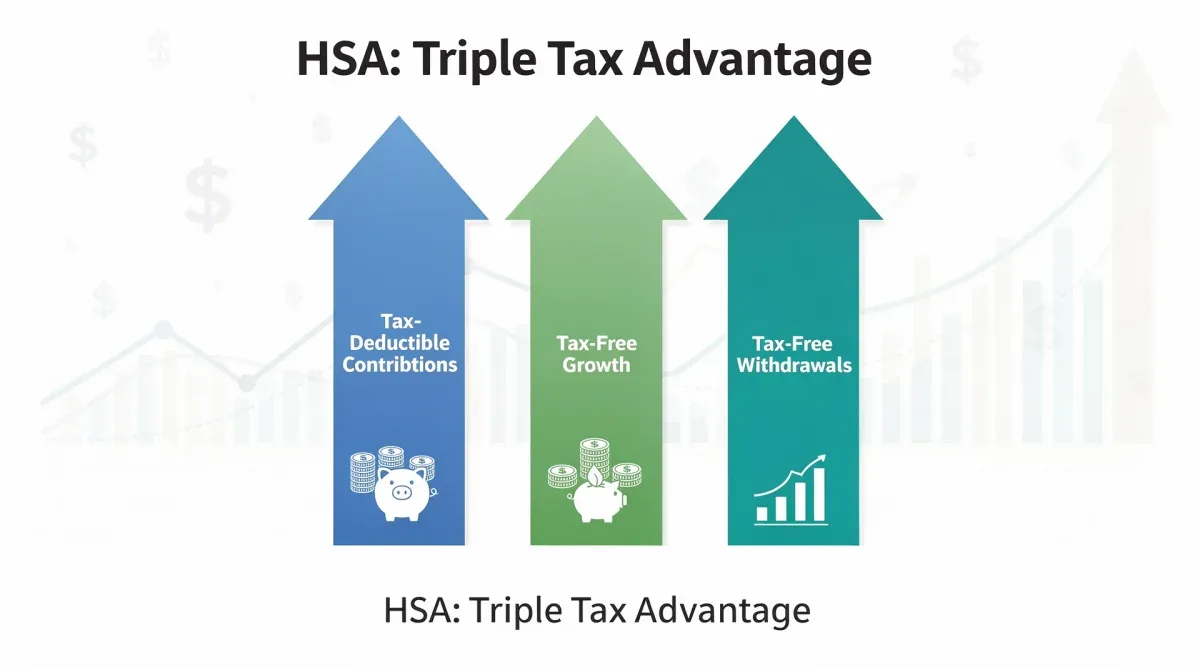
The HSA stands out due to its unique triple tax benefits: tax-deductible contributions, tax-free growth, and tax-free withdrawals for qualified medical expenses. This powerful combination makes it an unparalleled tool for both healthcare savings and long-term wealth accumulation.
For individuals with high-deductible health plans (HDHPs), an HSA provides a critical avenue to save for future medical costs while simultaneously investing for retirement. The strategic deployment of funds, particularly the initial investment, can significantly amplify these benefits over decades.
The focus on HSA Triple Tax Advantage: Investing the First $4,300 in Broad-Market Index Funds for Long-Term Growth highlights a critical threshold. This amount represents a common deductible range for many HDHPs, making it a practical target for initial investment while maintaining a healthy cash reserve for immediate medical needs.
The Three Pillars of HSA Tax Benefits
Contributions made to an HSA are tax-deductible, reducing your taxable income in the year they are made. This immediate tax break provides an upfront incentive for individuals to fund their accounts generously.
Once funds are in the HSA, they grow tax-free, meaning any dividends, interest, or capital gains generated by investments within the account are not subject to annual taxation. This allows investments to compound more efficiently over time, accelerating wealth accumulation.
Finally, qualified withdrawals for medical expenses are entirely tax-free. This includes a wide range of healthcare costs, from doctor's visits and prescriptions to dental and vision care, providing a significant advantage compared to other retirement accounts where withdrawals are typically taxed.
- Tax-deductible contributions reduce current income.
- Tax-free growth allows investments to compound faster.
- Tax-free withdrawals for qualified medical expenses provide a significant benefit.
- Unused funds roll over year after year, never expiring.
These combined benefits make the HSA an incredibly versatile financial instrument, serving as both a savings account for immediate medical needs and a powerful investment vehicle for long-term financial security. The strategic allocation of these funds is paramount to fully realizing their potential.

Why Invest the First $4,300 in Broad-Market Index Funds
Investing the initial $4,300 in broad-market index funds is a strategic move that aligns with the long-term growth potential of the HSA. This approach prioritizes diversified, low-cost exposure to the market, which is ideal for an account designed for decades of growth.
Broad-market index funds offer diversification across numerous companies and sectors, reducing the risk associated with individual stock picking. Their low expense ratios also mean more of your money stays invested and continues to grow, rather than being eroded by fees.
This initial investment threshold often aligns with the typical deductible for many high-deductible health plans, ensuring that a significant portion of potential out-of-pocket costs is covered by invested, growing funds rather than stagnant cash. The focus on HSA Triple Tax Advantage: Investing the First $4,300 in Broad-Market Index Funds for Long-Term Growth leverages this balance between liquidity and investment.
The Power of Diversification and Low Costs
Broad-market index funds track a wide segment of the market, such as the S&P 500 or the total U.S. stock market. This inherent diversification protects investors from the volatility of individual stocks and sectors, providing a smoother, more predictable growth trajectory over the long run.
The low expense ratios associated with index funds are another crucial advantage. Unlike actively managed funds, index funds typically have minimal management fees, allowing more of your investment returns to compound within your HSA. This efficiency significantly boosts long-term performance.
By investing in broad-market index funds, individuals are essentially betting on the overall growth of the economy, a strategy that has historically proven successful over extended periods. This passive approach reduces the need for constant monitoring and allows investors to focus on their long-term financial goals.
- Index funds offer broad diversification, mitigating risk.
- Low expense ratios maximize investment returns.
- Passive investing aligns with a long-term growth strategy.
- Historical performance supports sustained growth over decades.
This investment strategy within an HSA provides a robust foundation for wealth accumulation, making the most of the triple tax advantages while maintaining a diversified and cost-effective portfolio. It's a proactive step towards financial independence.
Maximizing HSA Contributions and Investment Strategy
To fully capitalize on the HSA Triple Tax Advantage: Investing the First $4,300 in Broad-Market Index Funds for Long-Term Growth, consistently maximizing annual contributions is essential. The IRS sets annual limits, and contributing the maximum amount ensures you reap the greatest tax benefits.
Once contributions are made, the next step involves strategically investing those funds. Many HSA providers offer investment options, allowing account holders to move funds beyond a basic savings account into various investment vehicles, including index funds.
It is crucial to understand the investment options available through your HSA provider and to select those that align with your risk tolerance and long-term financial goals. The goal is to ensure your HSA is not just a savings account but a powerful investment engine.
Strategic Investment Allocation within HSA
After reaching the $4,300 threshold in broad-market index funds, individuals can consider diversifying further or increasing their allocation to other asset classes based on their financial plan. The key is to maintain a long-term perspective.
For those with a high-deductible health plan, it's often recommended to keep a portion of the HSA in cash for immediate medical expenses. However, any funds exceeding this emergency reserve should be invested to benefit from tax-free growth.
Regularly reviewing your HSA investments and making adjustments as your financial situation or market conditions change is also important. This proactive management ensures your HSA remains optimized for both healthcare savings and investment growth.
The Long-Term Growth Potential of HSAs
The true power of the HSA Triple Tax Advantage: Investing the First $4,300 in Broad-Market Index Funds for Long-Term Growth unfolds over decades. The combination of tax-deductible contributions, tax-free growth, and tax-free withdrawals creates a compounding effect that can lead to substantial wealth accumulation.
Unlike other retirement accounts, the HSA offers unparalleled flexibility. Funds can be used tax-free for medical expenses at any age, and after age 65, they can be withdrawn for any purpose without penalty, though non-medical withdrawals will be subject to ordinary income tax.
This dual functionality makes the HSA a "super Roth IRA" for healthcare expenses and a highly effective retirement savings vehicle. Its unique structure provides a safety net for medical costs while simultaneously building a robust investment portfolio.
HSA as a Retirement Savings Vehicle
Many financial experts advocate for treating the HSA as a supplemental retirement account, especially after ensuring adequate coverage for immediate medical needs. The tax advantages make it an excellent choice for long-term savings.
By paying for current medical expenses out-of-pocket and allowing HSA funds to grow untouched, individuals can maximize the compounding effect. This strategy allows the HSA to become a significant source of tax-free income in retirement for healthcare costs.
The ability to invest in broad-market index funds within the HSA further enhances its appeal as a retirement tool. The diversified growth over decades can provide a substantial nest egg to cover healthcare costs in retirement, which are often a major expense.
Comparing HSA to Other Investment Accounts
When evaluating the HSA Triple Tax Advantage: Investing the First $4,300 in Broad-Market Index Funds for Long-Term Growth, it's beneficial to compare its advantages against other common investment vehicles like 401(k)s and IRAs. While each has its merits, the HSA offers distinct benefits.
Traditional 401(k)s and IRAs offer tax-deductible contributions and tax-deferred growth, but withdrawals in retirement are typically taxed. Roth IRAs offer tax-free withdrawals, but contributions are made with after-tax dollars.
The HSA uniquely combines elements of both, offering tax-deductible contributions, tax-free growth, and tax-free withdrawals for qualified medical expenses. This "triple threat" makes it exceptionally powerful, especially for those who anticipate significant healthcare costs in retirement.
HSA vs. 401(k) and IRA: A Tax Benefit Snapshot
A key differentiator is the flexibility of HSA withdrawals for medical expenses at any time without penalty or taxation. This contrasts sharply with 401(k)s and IRAs, which generally impose penalties for withdrawals before age 59½, even for medical reasons.
Furthermore, the ability to invest HSA funds in broad-market index funds allows for market-driven growth, similar to other retirement accounts. However, the tax-free nature of that growth and subsequent qualified withdrawals sets the HSA apart.
For individuals eligible for an HSA, prioritizing contributions to this account, particularly the initial investment in diversified funds, can be a more financially advantageous strategy than solely focusing on other retirement accounts, especially given rising healthcare costs.
- HSA offers tax-deductible contributions, tax-free growth, and tax-free withdrawals for medical expenses.
- 401(k)s and IRAs have tax-deferred growth but taxed withdrawals.
- Roth IRAs have tax-free withdrawals but after-tax contributions.
- HSA provides unique flexibility for medical expense withdrawals at any age.
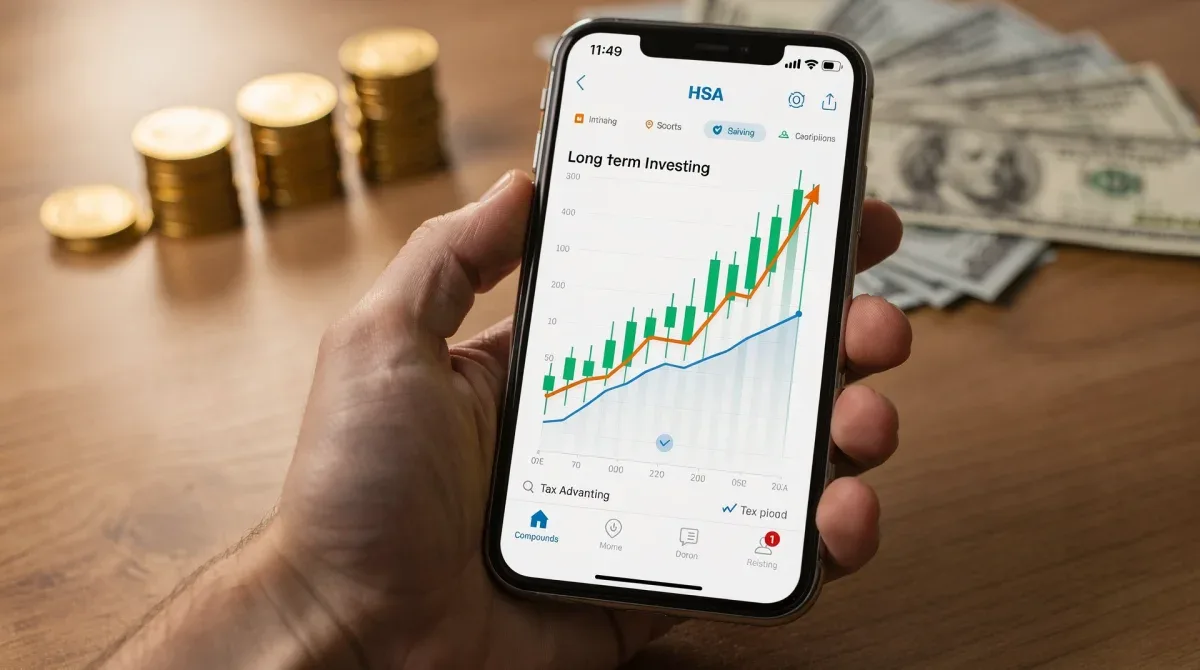
Understanding these distinctions helps individuals make informed decisions about where to allocate their savings, ensuring they maximize tax efficiency and long-term financial security across all their accounts.
Practical Steps for Investing Your HSA Funds
Embarking on the HSA Triple Tax Advantage: Investing the First $4,300 in Broad-Market Index Funds for Long-Term Growth requires a few practical steps. The first is ensuring you have an eligible high-deductible health plan (HDHP) and an HSA account with investment capabilities.
Many HSA providers initially hold funds in a basic savings account, requiring you to actively transfer money into investment options. It is crucial to navigate your provider's platform to locate and utilize these investment features.
Once investment options are identified, selecting broad-market index funds, such as those tracking the S&P 500 or the total U.S. stock market, is a straightforward way to begin. These funds are generally available as exchange-traded funds (ETFs) or mutual funds.
Getting Started with HSA Investments
Start by researching your HSA provider's investment options. Look for low-cost broad-market index funds with a proven track record. Most providers offer a selection of passively managed funds suitable for long-term growth.
Determine how much of your HSA balance you want to keep in cash for immediate medical expenses and how much you wish to invest. A common strategy is to invest any amount exceeding your annual deductible, ensuring you have a cash buffer while maximizing investment growth.
Set up automatic transfers from your HSA cash balance to your chosen investment funds. This dollar-cost averaging approach can help smooth out market fluctuations and ensure consistent investment over time, aligning with the long-term vision of the HSA.
The Role of HSA in Retirement Planning
The HSA Triple Tax Advantage: Investing the First $4,300 in Broad-Market Index Funds for Long-Term Growth positions the HSA as an indispensable tool in a comprehensive retirement plan. Its unique tax benefits can significantly alleviate the burden of healthcare costs in later life.
Healthcare expenses are often one of the largest and most unpredictable costs in retirement. By building a substantial, tax-free HSA balance, individuals can effectively pre-fund these future expenses, preserving other retirement savings for discretionary spending.
The flexibility of HSA funds after age 65, where they can be used for any purpose (taxable for non-medical withdrawals), provides an additional layer of financial security. This makes the HSA a versatile asset that adapts to changing needs in retirement.
Integrating HSA into Your Overall Financial Strategy
Consider the HSA as a complementary component to your 401(k), IRA, and other investment accounts. For many, it makes sense to fully fund the HSA each year before maximizing other retirement contributions, particularly if healthcare costs are a concern.
Maintaining detailed records of all qualified medical expenses paid out-of-pocket is a smart strategy. This allows you to reimburse yourself tax-free from your HSA at any point in the future, even decades later, without having to liquidate other assets.
The long-term strategy of investing the first $4,300 in broad-market index funds within an HSA is not just about saving for healthcare; it is about creating a robust, tax-advantaged financial reservoir that supports overall financial well-being throughout your life and into retirement.
Navigating Potential Risks and Considerations
While the HSA Triple Tax Advantage: Investing the First $4,300 in Broad-Market Index Funds for Long-Term Growth offers significant benefits, it is important to acknowledge potential risks and considerations. Like any investment, funds in an HSA are subject to market fluctuations.
The value of broad-market index funds can go down as well as up, and there is no guarantee of returns. Investors should have a long-term horizon to ride out market volatility and allow their investments to recover from potential downturns.
Another consideration is the requirement to be enrolled in a high-deductible health plan to contribute to an HSA. This means individuals must be comfortable with higher out-of-pocket costs for healthcare until their deductible is met, which might not be suitable for everyone.
Important Factors to Keep in Mind
Ensure you maintain an adequate cash reserve within your HSA or other accessible funds to cover your deductible and unexpected medical expenses. While investing for growth is key, liquidity for immediate healthcare needs remains paramount.
Regularly review the investment options provided by your HSA administrator. Fees and fund performance can vary, and it's important to ensure your chosen funds remain competitive and aligned with your investment objectives.
Finally, stay informed about changes to HSA rules and contribution limits, which are updated annually by the IRS. Adhering to these guidelines ensures you continue to maximize the tax advantages without incurring penalties.
The Future of HSA and Investment Strategies
The trajectory of the HSA Triple Tax Advantage: Investing the First $4,300 in Broad-Market Index Funds for Long-Term Growth suggests continued relevance and importance in personal finance. As healthcare costs continue to rise, the need for tax-advantaged savings vehicles becomes even more critical.
Policymakers and financial institutions are increasingly recognizing the value of HSAs, leading to ongoing discussions about potential enhancements or adjustments to their structure. Staying informed about these developments is key for optimizing your strategy.
For individuals, the proactive adoption of a strategy that combines consistent contributions with intelligent investment choices, such as broad-market index funds, will be instrumental in leveraging the full potential of their HSA for both current and future financial needs.
Evolving Landscape of Healthcare and Finance
The integration of healthcare and financial planning is becoming more seamless, with HSAs at the forefront of this trend. Their adaptability to various life stages, from early career to retirement, underscores their enduring utility.
As technology advances, HSA administration is also becoming more user-friendly, offering better tools for tracking expenses, managing investments, and projecting future savings. This improved accessibility empowers individuals to take greater control of their financial health.
Ultimately, the long-term outlook for HSAs remains strong, reinforcing their position as a cornerstone of a well-rounded financial strategy. Embracing the investment aspect, particularly with diversified, low-cost index funds, is a prudent path forward.
| Key Point | Brief Description |
|---|---|
| Triple Tax Advantage | Deductible contributions, tax-free growth, tax-free withdrawals for medical. |
| Investing $4,300 | Strategic initial investment in broad-market index funds for long-term growth. |
| Broad-Market Index Funds | Diversified, low-cost investment approach for consistent returns. |
| Retirement Planning | HSA acts as a powerful, tax-advantaged retirement savings vehicle. |
Frequently Asked Questions About HSA Investing
What does 'triple tax advantage' mean for an HSA?▼The triple tax advantage refers to three key benefits: contributions are tax-deductible, investments grow tax-free, and withdrawals for qualified medical expenses are tax-free. This combination makes the HSA a highly efficient financial tool for both healthcare savings and investment growth.
Why invest specifically the first $4,300 in broad-market index funds?▼The $4,300 figure often aligns with typical high-deductible health plan deductibles, providing a practical investment target. Broad-market index funds offer diversification and low costs, making them ideal for long-term, tax-free growth within the HSA, maximizing the triple tax advantage from the outset.
Can I lose money investing my HSA funds?▼Yes, like any investment, funds in an HSA are subject to market risk and can decrease in value. Investing in broad-market index funds is generally considered less risky than individual stocks, but it's crucial to have a long-term perspective to ride out market fluctuations and achieve potential growth.
What happens to HSA funds if I don't use them for medical expenses?▼Unused HSA funds roll over year after year and never expire. After age 65, you can withdraw funds for any purpose without penalty, though non-medical withdrawals will be taxed as ordinary income. For qualified medical expenses, withdrawals remain tax-free at any age, even in retirement.
How do I start investing my HSA contributions?▼First, ensure your HSA provider offers investment options. Then, navigate their platform to transfer funds from your cash balance to an investment account. Select low-cost, broad-market index funds that align with your long-term goals. Many providers allow for automated investments once set up.
What this means
The continued emphasis on HSA Triple Tax Advantage: Investing the First $4,300 in Broad-Market Index Funds for Long-Term Growth underscores a critical shift in personal finance toward integrated healthcare and investment strategies. This approach is not merely about saving but about strategically building wealth to address future needs effectively. Individuals should remain vigilant about evolving IRS guidelines and market trends to optimize their HSA contributions and investment choices. The trajectory indicates that HSAs will play an even more prominent role in financial planning, offering a robust tool for both health security and retirement preparedness.